Your blood pressure is 135/85 at a checkup. You feel fine. A friend in Europe says her doctor calls that reading “elevated,” while your doctor calls it “stage 1 hypertension.” Both descriptions can be accurate. The more useful question is what those numbers mean for you once you and your doctor know whether they are typical.
What do the two blood pressure numbers mean?
The top number, systolic pressure, measures the pressure against your artery walls when your heart pumps. The bottom number, diastolic pressure, measures it between beats. Both are measured in millimeters of mercury (mm Hg). In the U.S., the 2025 guideline uses these categories for adults:
| Category | Top number | Bottom number |
|---|---|---|
| Normal | Below 120 | And below 80 |
| Elevated | 120–129 | And below 80 |
| Stage 1 hypertension | 130–139 | Or 80–89 |
| Stage 2 hypertension | 140 or higher | Or 90 or higher |
Use whichever number puts you in the higher category. For example, 128/76 is elevated, while 128/84 falls in stage 1 because of the bottom number. A single reading in that range usually needs confirmation with repeated measurements.
Under the 2024 European Society of Cardiology guideline, an office reading of 135/85 counts as elevated. The European threshold for hypertension in the office is a top number of at least 140 or a bottom number of at least 90. Both guidelines consider a person's risk when deciding whether to treat.
When does a high reading need urgent attention?
Call 911 in the U.S. for new chest pain, severe shortness of breath, or signs of stroke such as sudden weakness on one side or trouble speaking. Seek help immediately, even if you have no blood pressure reading. Do not delay to check it again.
If you are not pregnant, feel well and get a top number over 180 or a bottom number over 120, sit quietly and repeat the measurement after at least one minute. If it is still that high, contact a health professional right away. Take an extra dose only if your clinician has given you specific instructions. Pregnancy and the postpartum period have different thresholds. Contact your maternity care team promptly about high readings during those times.
How can you get a reliable reading at home?
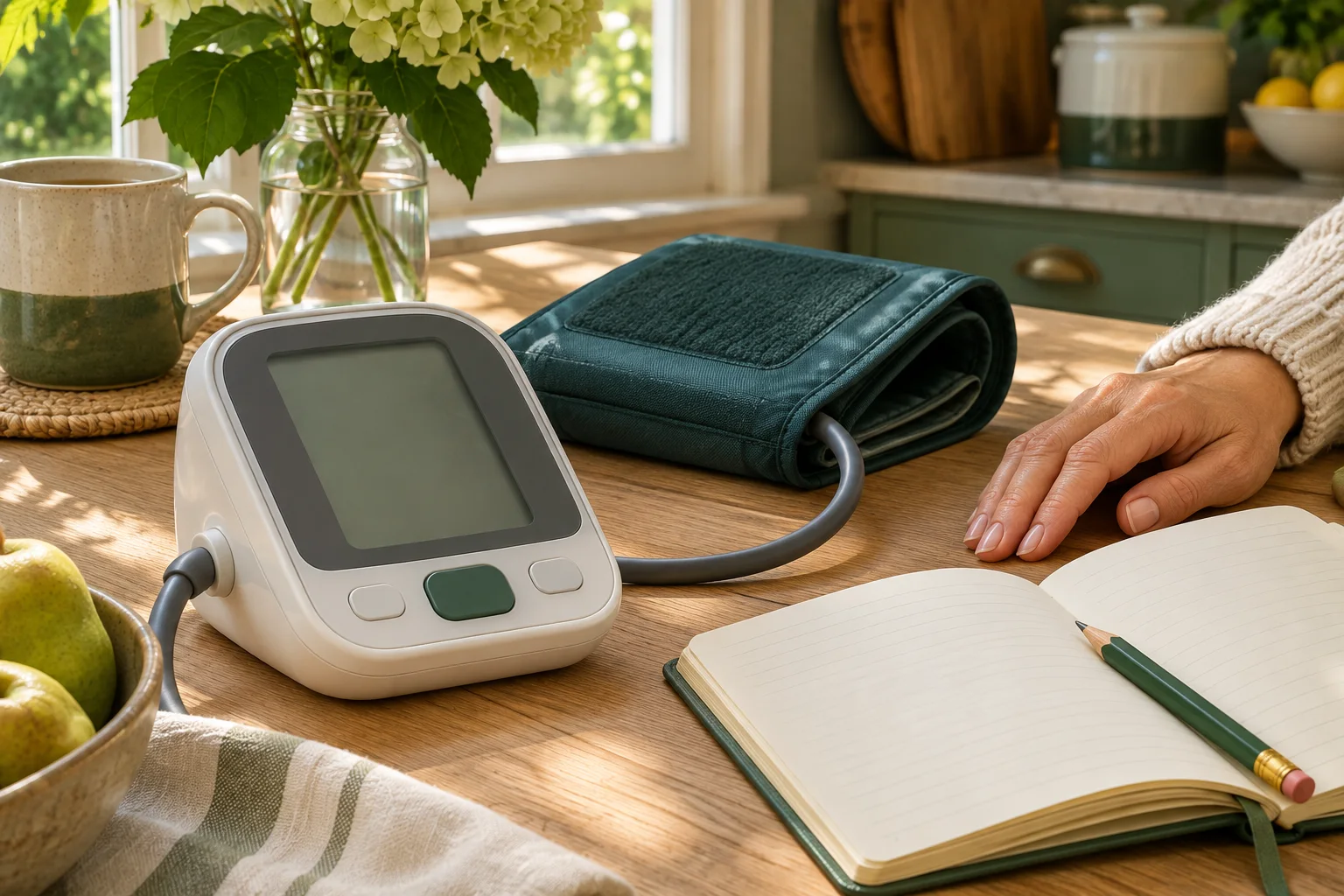
Try measuring before your morning coffee. Choose a validated automatic upper-arm monitor with a cuff that fits your arm. For the 30 minutes beforehand, avoid caffeine, smoking and exercise. Empty your bladder, then spend five quiet minutes in a chair with your back supported and both feet flat on the floor.
Place the cuff on bare skin and rest your arm on a table so the cuff is at heart level. Keep still and quiet. Take two readings one minute apart and record both. If your clinician asks for a home log, use the same times each day and bring the readings and the monitor to your appointment.
A home log can explain why your office reading looks unusual. Some people consistently measure higher at the doctor's office. Others have normal readings there and higher ones at home. A clinician may use a monitor worn for 24 hours to see what happens during an ordinary day and overnight.
Why does blood pressure rise even when you feel well?
The heart supplies the force, the arteries determine how easily blood flows, and the kidneys adjust how much salt and water the body retains. With age, large arteries often become stiffer. The top number can rise even while the bottom number stays relatively low. Family history matters, too. Relatives can inherit a tendency toward higher pressure and share habits that affect it.
High blood pressure commonly causes no symptoms. Over time, it can strain the heart and damage blood vessels in the brain, kidneys and eyes. Diabetes or kidney disease can make a given reading more consequential. Feeling well with a top number of 160 is a reason to follow up just as you would if you felt unwell.
Sometimes there is a specific, treatable cause. For an endocrinologist, one clue is blood pressure that remains high despite several medicines. Excess production of the hormone aldosterone can make the kidneys retain sodium and may lower potassium. Kidney disease, thyroid disorders, obstructive sleep apnea and some medicines are other possibilities, especially when hypertension starts young or suddenly gets harder to control.
At what point do doctors recommend medication?
For most U.S. adults with hypertension, the treatment goal is below 130/80. The point at which medication is recommended is a separate decision. Consider two people whose usual pressure is 135/85. One has already had a stroke. The other has no known cardiovascular disease and a low estimated risk. Their clinicians may reasonably suggest different first steps.
- Average systolic pressure of 140 or higher, or diastolic pressure of 90 or higher. The U.S. guideline recommends medication alongside lifestyle changes.
- Average systolic pressure of 130 or higher, or diastolic pressure of 80 or higher. Medication is also recommended for people with cardiovascular disease, a previous stroke, diabetes, chronic kidney disease or a ten-year cardiovascular risk of at least 7.5% on the PREVENT risk calculator.
- Stage 1 hypertension with lower risk. Start with lifestyle changes. If the average is still in the hypertension range after three to six months, the guideline recommends adding medication.
European guidance generally aims for a treated systolic pressure of 120–129 when well tolerated. A clinician may adjust the goal for someone who is frail or feels faint when standing. A reading of 118/74 in someone who feels well generally needs no correction. Repeated lightheadedness, falls or fainting after a medication change deserve attention even if the monitor displays a reassuring number.
Why might you start with two medicines?
One medicine can relax blood vessels while another helps the kidneys remove excess sodium. For stage 2 hypertension, U.S. guidance favors starting two first-line medicines from different classes, preferably in one pill. Common choices include an ACE inhibitor or an angiotensin receptor blocker, a long-acting calcium channel blocker, and a thiazide-type diuretic. The choice depends in part on kidney function, other conditions and side effects.
Suppose you start treatment and your readings settle around 125/78. That is often evidence the medicine is working. Keep taking it as prescribed and bring your log to follow-up. If dizziness, cost or a complicated schedule is making that difficult, say so. Your clinician can review the plan with you.
What if the usual treatment is not enough?
Before adding another drug, a clinician will check cuff fit, readings outside the office, medication doses and anything that makes it hard to take them regularly. They may also look for sleep apnea or excess aldosterone. These checks can change the treatment choice.
One specialist option is aprocitentan (Tryvio), an add-on medicine for adults whose pressure remains inadequately controlled on other drugs. It blocks signals from endothelin, a substance that narrows blood vessels. It can cause fluid retention and liver injury, requires monitoring and must not be used during pregnancy.
Another option for selected patients is renal denervation. A specialist passes a catheter into the arteries supplying the kidneys to reduce nerve signals involved in blood pressure control. The response varies, and patients generally continue their medicines. The decision should include a discussion of the procedure's risks and the likely benefit for that individual.
What about coffee, salt and supplements?
Caffeine can raise blood pressure temporarily, particularly if you seldom drink it. A reading taken just after a strong coffee is a poor guide to your usual resting pressure. If you enjoy coffee and your pressure is difficult to control, tell your clinician how much you drink, including energy drinks and other sources of caffeine.
For a change you can sustain, start with something you already do. Compare sodium on two soups you buy regularly. Take a walk after lunch if that fits your abilities. A DASH-style eating pattern emphasizes vegetables, fruit, whole grains and other minimally processed foods. Reducing alcohol, stopping smoking and getting help for sleep apnea also belong in the conversation. Mention herbal products as well: licorice root can raise blood pressure.
At your next visit, bring your home readings and ask two questions: “What average should I aim for?” and “What should I do if my readings are much higher or lower than usual?” Those answers give you a plan for the next time you put on the cuff.
Adapted for U.S. readers by VitalMeGuide from material by Aivars Lejnieks, MD, endocrinologist.
Read the sources
- American Heart Association and American College of Cardiology. 2025 U.S. high blood pressure guideline.
- European Society of Cardiology. 2024 guidelines for elevated blood pressure and hypertension.
- American Heart Association. Home blood pressure monitoring.
- American Heart Association. When to call 911 about high blood pressure.
- National Heart, Lung, and Blood Institute. High blood pressure causes and risk factors.
- DailyMed. Tryvio (aprocitentan) prescribing information.
- U.S. Food and Drug Administration. Paradise ultrasound renal denervation system.
- American Heart Association. Coffee consumption and very high blood pressure.
- National Center for Complementary and Integrative Health. Licorice root.
This article explains selected evidence. It is not a systematic review or individual medical advice.