“Bad teeth run in my family.” “If my gums bleed, I should leave them alone.” “Nobody sees a missing back tooth, so why replace it?” There is no shortage of confident claims about oral health. But not all of them help protect your teeth and gums.
Everyday care involves more than a toothbrush and toothpaste. Brushing technique, eating habits and recognizing problems early also matter.
Myth 1: Brushing for two minutes is all that matters
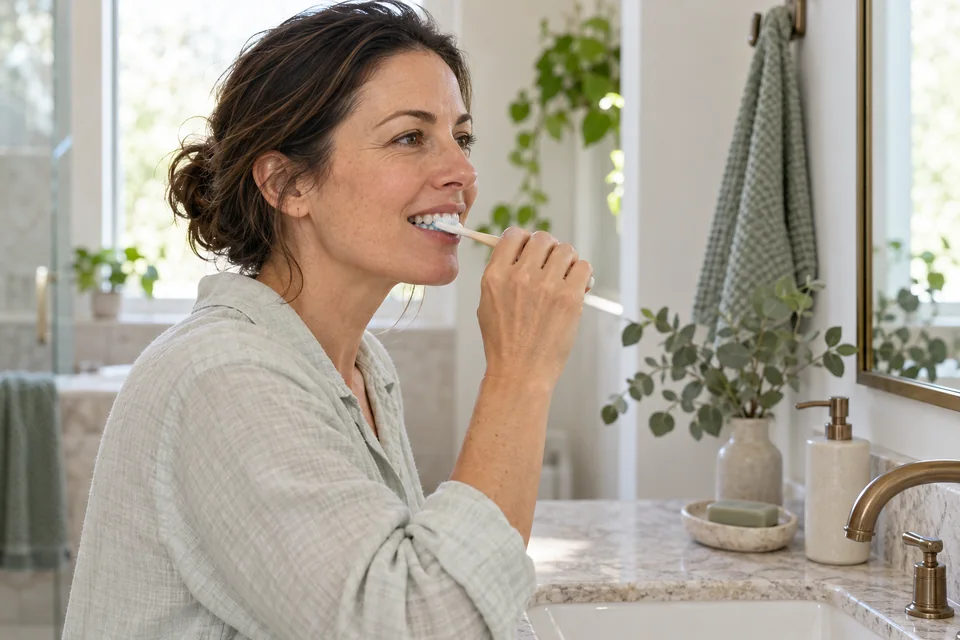
Brush with fluoride toothpaste twice a day for about two minutes—last thing before bed and on one other occasion. This is sound advice, but time alone does not guarantee a thorough clean.
Clean the outer, inner and chewing surfaces of every tooth, paying attention to the gumline. If you spend most of those two minutes on your front teeth, the back teeth may be left uncleaned.
Both manual and electric toothbrushes can be suitable. Use an electric brush according to the instructions for that model; one brushing technique does not fit every design. A pressure sensor can help you avoid pressing too hard, but gentle, thorough cleaning matters with any brush.
Children need an adult’s help. Having fewer teeth does not mean that a quick pass with the brush is enough.
After brushing, spit out excess toothpaste without immediately rinsing your mouth with water, so the fluoride stays on your teeth longer.
Avoid brushing immediately after acidic foods or drinks. The American Dental Association recommends waiting about an hour; you can rinse your mouth with water in the meantime. This advice specifically concerns acid exposure, rather than a blanket rule to delay brushing after every meal.
Crowns, bridges and dentures need cleaning, too
A crown does not make a tooth immune to problems. Plaque can still collect at the crown’s edge, and decay can develop. Clean around and underneath bridges using tools recommended by your dental professional.
Rinsing alone is not enough for removable dentures. Clean them daily with a soft brush and a nonabrasive cleanser suitable for the denture material. Use cleaning tablets as directed; soaking does not replace brushing.
Regular toothpaste may be too abrasive. Avoid hot water and harsh household cleaning products. Your remaining natural teeth and the soft tissues of your mouth need separate care.
Myth 2: You do not need to clean between your teeth
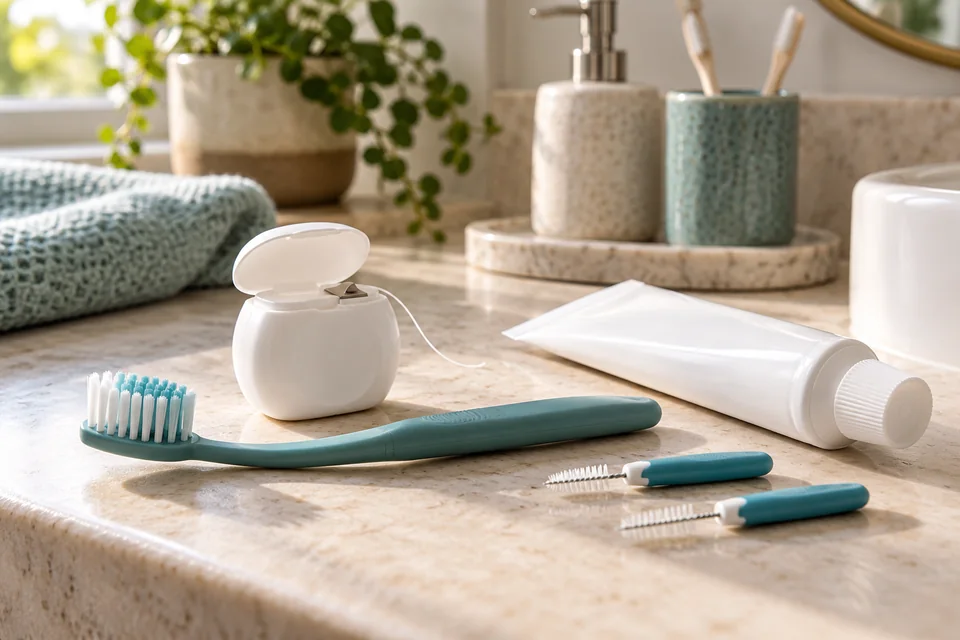
A toothbrush cannot reach every area between your teeth. Interdental cleaning should be part of your daily routine.
Dental floss can work well for tight spaces, while appropriately sized interdental brushes can help with wider gaps. Your dentist or dental hygienist can help you choose the right tool and size. Do not force a brush through a gap that is too small.
You can floss before brushing. Guide the floss gently along the side of each tooth rather than snapping it into your gums.
If ordinary floss is difficult to use, a floss holder or another interdental cleaning tool may help. Follow the manufacturer’s instructions: a reusable holder does not mean that used floss should be reused.
Myth 3: The most heavily advertised toothpaste is the best
Choose toothpaste according to your oral health needs. Fluoride toothpaste plays an important role in everyday cavity prevention.
Sensitive teeth and bleeding gums are different problems. A toothpaste for tooth sensitivity may not help if the underlying issue is gum inflammation. Describe your symptoms clearly: is the problem pain from cold drinks, bleeding, swelling or something else?
Toothpaste does not replace treatment for a cavity or periodontitis. It is part of your care routine, not a solution to every oral health problem.
Myth 4: Bleeding gums are normal
Repeated gum bleeding should not be ignored. It often indicates plaque-related gum inflammation, called gingivitis, although other causes, including injury from cleaning too aggressively, are possible.
Bleeding alone does not establish a diagnosis of periodontitis. In periodontitis, the tissues and bone supporting the teeth are damaged, and teeth may eventually become loose. A dental examination is needed to assess this.
If your gums bleed when you floss, do not automatically stop cleaning between your teeth. Continue gently and check your technique. If the bleeding recurs, make an appointment with your dentist or dental hygienist.
Infrequent flossing is not the only possible explanation. A dental professional will also assess tartar, the edges of fillings and crowns, and other factors that can make cleaning difficult.
Myth 5: You can eat and drink anything as long as you brush twice a day
Bacteria in the mouth use sugars and starches from food to produce acids. Repeated acid exposure promotes mineral loss from enamel and the development of cavities.
The amount of sugary food matters, but so does how often you consume it. Sipping sweetened tea over a long period or frequently snacking exposes your teeth to repeated acid attacks.
Juice and smoothies are not automatically tooth-friendly: they can contain both sugars and acids. However, unsweetened tea or coffee should not simply be treated as equivalent to sugary drinks.
Saliva helps protect teeth and restore their mineral balance. Drinking water, eating balanced meals and having sugary foods less often between meals can help.
Crunchy vegetables can encourage chewing and saliva production, but an apple or carrot does not replace a toothbrush.
Myth 6: Good or bad teeth are entirely inherited
Genetics can affect tooth development and susceptibility to certain oral diseases. However, there is no basis for assigning one universal figure, such as saying that heredity accounts for exactly 10% of everyone’s dental health.
Plaque, fluoride use, diet, saliva flow, smoking, health conditions and access to dental care also matter.
“Bad teeth run in my family” does not mean that nothing can change. Equally, apparently strong teeth are not a reason to skip brushing at bedtime.
Myth 7: A missing back tooth does not matter because nobody sees it
Back teeth help break down food and contribute to your bite. Losing a tooth can affect chewing and allow other teeth to shift.
Discuss a missing tooth with your dentist even if the gap is not visible when you smile. Replacement options may include an implant, a bridge or a removable partial denture.
However, there is no universal six-month deadline that applies to everyone. Whether replacement is needed, which option is appropriate and when to proceed depend on the tooth, your bite, the condition of the bone and your treatment plan.
Myth 8: Oral health has no connection to the rest of the body
Oral health is connected to overall health. Diabetes, for example, increases the risk of gum disease and can slow healing, while gum disease can make blood sugar management more difficult.
Research has also found an association between periodontitis and cardiovascular disease. But an association is not the same as a proven cause. It is not accurate to say that every cavity causes a heart attack or that treating gum disease guarantees protection from heart disease.
Under certain circumstances, oral bacteria can contribute to infective endocarditis—an infection of the heart’s inner lining or valves—particularly in people with certain heart conditions. This is different from a heart attack or myocarditis.
Research into links between oral health, dementia and other conditions is also not a basis for blaming every such illness on poor dental care. Oral infections deserve treatment because of the harm they cause in their own right.
When should you make a dental appointment?

If you have a mouth sore, thickened area, or a red or white patch that has not gone away after two weeks, see a dentist or doctor. This does not necessarily mean cancer, but the change needs to be checked.
Repeated gum bleeding, loose teeth, pain or swelling also need dental assessment.
Regular, thorough care and timely treatment help protect your teeth. Recognizing problems early gives you more opportunities to keep your natural teeth.
Based on material submitted by dental hygienist Anda Mironova. English translation and editorial clarifications by VitalMeGuide with AI assistance. Clarifications address brushing recommendations, denture care, genetics, tooth replacement timing and the limits of evidence linking oral and systemic health. This edited English version has not been confirmed as reviewed by the original author.
Read the sources
- NHS · How to keep your teeth clean
- American Dental Association · Dietary Acids and Your Teeth
- American Dental Association · Flossing
- American Dental Association · Dentures
- NIDCR · Periodontal (Gum) Disease
- NIDCR · Tooth Decay
- American Dental Association · Genetics and Oral Health
- American Dental Association · Missing Teeth
- CDC · Oral Health and Diabetes
- American Heart Association · Periodontal Disease and Atherosclerotic Cardiovascular Disease · 2025 scientific statement summary
- American Heart Association · Oral Health
- NIDCR · Oral Cancer
This article explains selected evidence. It is not a systematic review or individual medical advice.