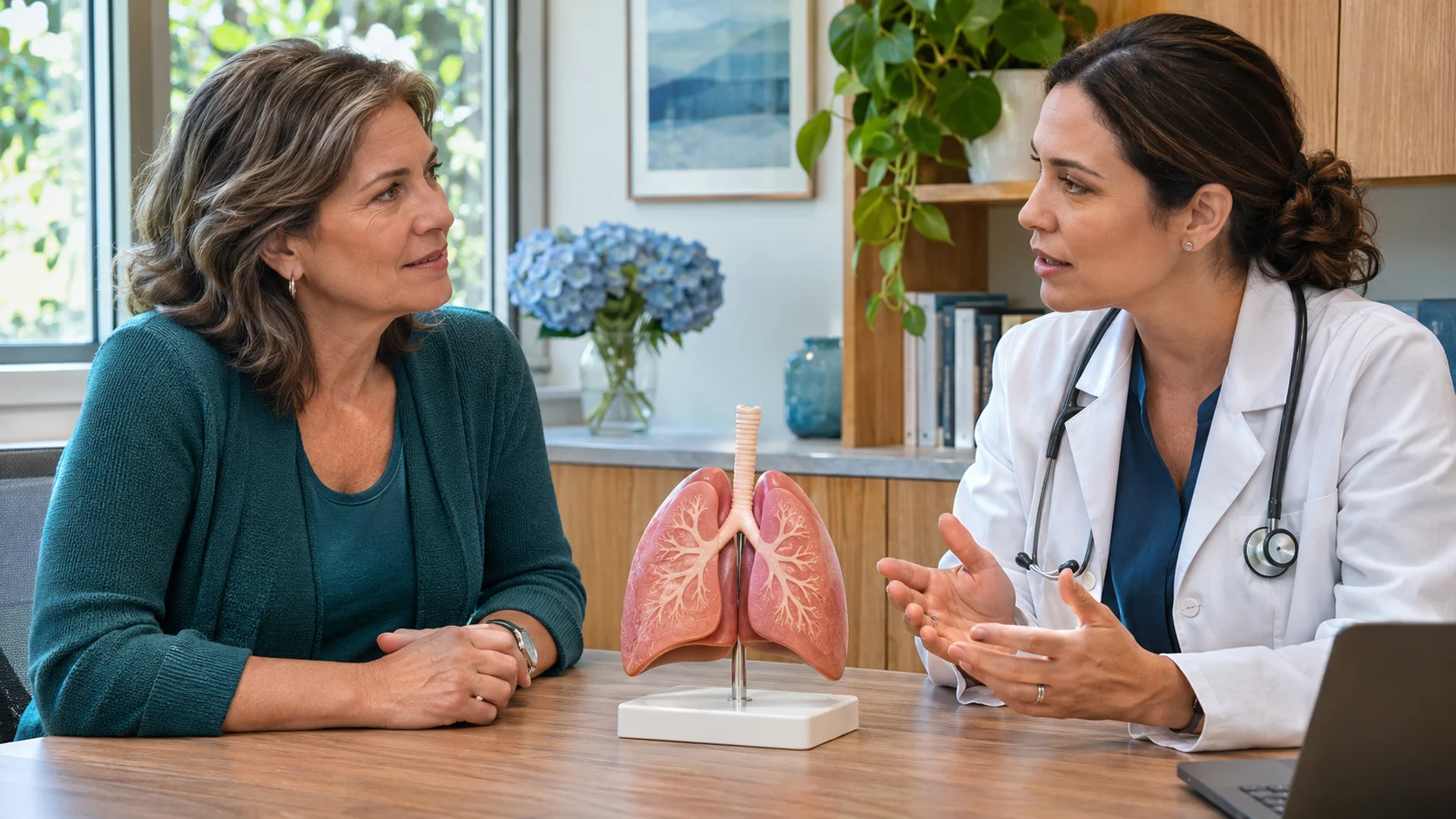
Why should I worry about lung cancer if I don't smoke, exercise regularly, feel healthy, and have no symptoms? It's a reasonable question. Lung cancer is still widely associated with heavy smoking, older age, and a persistent cough. But the disease is considerably more complex than that familiar picture suggests. Lung cancer is also diagnosed in people who have never smoked. It affects women and, occasionally, relatively young adults. And sometimes it's discovered in someone who felt perfectly healthy right up until the diagnosis.
At the same time, one fact remains essential: cigarette smoking is still the leading preventable risk factor for lung cancer. Modern medicine, however, has fundamentally changed how doctors understand and treat this disease. In the past, a lung cancer diagnosis often meant limited treatment options, particularly when the disease had spread. Today, treatment may include targeted drugs, immunotherapy, precise radiation therapy, and minimally invasive surgery.
Some people with advanced lung cancer who once faced an extremely poor prognosis are now living for years with their disease under control. Still, treatment success depends on the cancer type, stage, molecular characteristics, and the patient's overall health. That's why understanding personal risk, recognizing the value of early detection, and knowing how modern treatment works are more important than ever.
Lung Cancer Is Not Just a Smoker's Disease
Historically, lung cancer has been closely associated with smoking. That connection remains extremely important. However, not every case of lung cancer is caused by tobacco use. In the United States, approximately 10% to 20% of lung cancers occur in people who never smoked or smoked fewer than 100 cigarettes in their lifetime, according to the CDC. Women make up a relatively large proportion of patients in this group, and lung cancer can also develop at a younger age.
This doesn't mean lung cancer is becoming predominantly a disease of never-smokers. Smoking continues to account for most lung cancer cases, and the risk increases with the duration and intensity of tobacco exposure. However, greater understanding of lung cancer in never-smokers has revealed important differences in tumor biology.
Why Is Lung Adenocarcinoma So Common?
Lung cancer includes several different histological types. Historically, squamous cell carcinoma was strongly associated with smoking and often developed in the larger airways. Today, adenocarcinoma is the most common histological type of lung cancer in many countries, including the United States. It develops from glandular-type cells and is often found in the outer regions of the lungs. Adenocarcinoma is also the most common type of lung cancer among people who have never smoked. However, it frequently occurs in smokers as well.
The tumor's histological appearance alone cannot establish whether someone has smoked. Importantly, some adenocarcinomas have specific molecular alterations that can be targeted with specialized medications. This is one of the most significant advances in modern lung cancer treatment.
Why Is Lung Cancer Often Diagnosed at an Advanced Stage?
Detecting lung cancer early can be difficult. First, a small tumor in the lung may cause no symptoms for a long time. A small tumor can grow without causing pain or noticeable breathing problems. A person may continue working, exercising, and feeling well. Routine blood tests may also remain completely normal during the early stages.
No blood test is recommended as a substitute for low-dose CT screening in eligible people. Blood-based cancer detection tests are being studied, but routine laboratory results cannot establish that someone is cancer-free. This means that a normal complete blood count or routine laboratory panel cannot rule out lung cancer. Second, early symptoms can be nonspecific. A cough, fatigue, or shortness of breath may be related to bronchitis, asthma, chronic obstructive pulmonary disease (COPD), or another condition.
Sometimes symptoms are attributed to an existing health problem for too long. Third, delays can occur between the discovery of an abnormal lung finding and evaluation by an appropriate specialist. When an unexplained lung nodule is found, its size, shape, growth pattern, and the patient's risk factors must be carefully assessed. Not every lung nodule is cancerous. But not every nodule should be repeatedly monitored without a clear diagnostic plan.
What Are the Symptoms of Lung Cancer?
Early lung cancer often causes no noticeable symptoms. As the disease progresses, however, certain warning signs may appear. One of the most common is a cough that doesn't go away or becomes progressively worse. A change in the usual pattern of a longstanding cough also deserves attention. Other possible symptoms include:
- Coughing up blood or blood-streaked mucus.
- Shortness of breath.
- Chest pain, especially when breathing or coughing.
- Persistent hoarseness.
- Repeated pneumonia in the same area of the lung.
- Unexplained weight loss.
- Loss of appetite and persistent fatigue.
However, none of these symptoms proves that someone has lung cancer. And importantly, developing symptoms doesn't automatically mean the disease has reached stage III or IV. Some symptomatic cancers are still diagnosed at an earlier stage. That's why it's important not to delay seeking medical advice or assume that treatment will no longer be possible. A persistent cough, blood in sputum, or unexplained breathing difficulties should be evaluated by a healthcare professional.
Coughing up a large amount of blood or experiencing severe breathing difficulties requires emergency medical attention.
Can a Chest X-Ray Detect Lung Cancer Early?
A chest X-ray is a widely available and useful diagnostic test. It can help identify pneumonia, fluid around the lungs, larger tumors, and other abnormalities. However, chest X-rays have important limitations. A small tumor may be hidden behind the heart, ribs, diaphragm, or other anatomical structures. Some lung adenocarcinomas appear on CT scans as subtle, hazy abnormalities known as ground-glass opacities.
These may be difficult to detect on a standard chest X-ray. Ground-glass changes can also result from infection or inflammation; they are not a diagnosis of cancer. As a result, a normal chest X-ray doesn't always rule out lung cancer. If a healthcare professional has a reasonable suspicion of cancer, a CT scan may be necessary even when the X-ray appears normal.
Why Aren't Routine Chest X-Rays Recommended for Lung Cancer Screening?
Large clinical studies have not demonstrated that routine chest X-ray screening reduces deaths from lung cancer. For this reason, U.S. recommendations favor a different test for eligible high-risk individuals: low-dose computed tomography. Chest X-rays remain useful in evaluating symptoms, but they are not a substitute for evidence-based lung cancer screening.
How Does Low-Dose CT Lung Cancer Screening Work?
Low-dose computed tomography, or LDCT, uses X-rays to create detailed images of the lungs while limiting radiation exposure. Compared with a standard chest X-ray, it is much better at detecting small lung nodules. Clinical trials have shown that regular LDCT screening can reduce lung cancer deaths in appropriately selected high-risk populations. However, it isn't a test automatically recommended for every adult.
Who Qualifies for Lung Cancer Screening in the United States?
The U.S. Preventive Services Task Force (USPSTF) recommends annual LDCT screening for adults who:
- Are between 50 and 80 years old.
- Have at least a 20-pack-year smoking history.
- Currently smoke or quit within the past 15 years.
The American Cancer Society has slightly different recommendations. It recommends annual screening for people ages 50 to 80 with at least a 20-pack-year smoking history who currently smoke or smoked in the past, regardless of how long ago they quit.
Screening is not appropriate when serious illness substantially limits life expectancy or when a person cannot or would not undergo treatment if cancer is found. Under USPSTF guidance, screening also stops once a person has been smoke-free for 15 years; the ACS does not use that quit-time cutoff. These recommendations are intended for people who do not have symptoms suggesting lung cancer. When symptoms are already present, diagnostic evaluation is needed rather than routine screening.
What Is a Pack-Year?
A pack-year measures the combination of smoking intensity and duration. One pack-year means smoking an average of one pack of cigarettes per day for one year. For example, 20 pack-years could mean smoking one pack daily for 20 years or two packs daily for 10 years. It's a way of estimating cumulative cigarette exposure.
Does Lung Cancer Screening Have Risks?
Yes. LDCT may detect benign nodules that require further testing. Sometimes results are falsely positive, leading to additional scans or biopsies. There is also a small risk related to radiation exposure and a possibility of overdiagnosis — detecting a cancer that might never have caused symptoms during the person's lifetime. That's why screening offers the greatest net benefit to people with a sufficiently elevated risk of lung cancer. The decision to undergo regular screening should be made after discussion with a healthcare professional.
Should People Who Never Smoked Get Regular CT Scans?
Currently, the United States does not have a general recommendation for annual lung cancer screening in people who have never smoked. This doesn't mean they cannot develop the disease. However, the benefits and potential harms of widespread screening in this group have not been sufficiently established. Someone with unusual risk factors, such as substantial radon exposure or a strong family history of lung cancer, can discuss their situation individually with a healthcare professional. Symptoms, however, require evaluation regardless of smoking history.
What Are the Main Risk Factors for Lung Cancer?
Smoking
Cigarette smoking is the leading risk factor for lung cancer. Tobacco smoke contains numerous carcinogenic substances that can damage cellular DNA and contribute to malignant changes. Risk increases with the duration and intensity of smoking. However, quitting is beneficial at any age. After smoking cessation, lung cancer risk gradually declines, although people who smoked heavily for many years may remain at higher risk than those who never smoked.
Secondhand Smoke
Breathing tobacco smoke from other people's cigarettes also increases lung cancer risk. There is no safe level of secondhand smoke exposure. Avoiding indoor environments where smoking occurs is an important preventive measure.
Radon Gas
Radon is a radioactive gas that forms naturally in soil and rocks. It can enter buildings through cracks in foundations and other openings. Radon is invisible and odorless. Long-term exposure to elevated indoor radon levels increases lung cancer risk. In the United States, radon is one of the most important lung cancer risk factors after smoking and is particularly relevant to people who have never smoked. Because radon cannot be detected by smell or symptoms, testing a home is an important practical preventive measure.
If levels are elevated, steps can be taken to reduce indoor radon exposure.
Occupational Carcinogens
Certain occupations can expose workers to substances that increase lung cancer risk. Examples include asbestos, arsenic, crystalline silica dust, certain metals, diesel exhaust, and other occupational carcinogens. The actual risk depends on the substance, concentration, duration of exposure, and protective measures. Not every job involving asphalt or chemicals carries the same level of risk. However, workers exposed to known carcinogens should follow workplace safety requirements and use appropriate protective equipment.
Air Pollution
Outdoor air pollution, particularly long-term exposure to fine particulate matter, is associated with an increased risk of lung cancer. This is another reason why lung cancer can occur in people who have never smoked.
Family History and Genetic Susceptibility
Having a close relative with lung cancer may increase a person's individual risk. However, a family history doesn't mean lung cancer will inevitably develop. In some families, shared environmental exposures may help explain the increased risk. Inherited genetic susceptibility can also play a role. It's important to distinguish inherited genetic changes from mutations that develop only within tumor cells.
Chronic Lung Diseases
Chronic obstructive pulmonary disease (COPD) and certain fibrotic lung diseases are associated with an increased risk of lung cancer. Previous lung infections and scarring may also be relevant in specific situations. However, having a chronic lung condition doesn't mean cancer is inevitable.
A Lung Nodule Has Been Found. Does That Mean Cancer?
No. Small lung nodules are relatively common findings on CT scans. They may result from previous infections, inflammation, scarring, or benign growths. However, some nodules are malignant. That's why healthcare professionals evaluate their size, shape, density, location, changes over time, and the patient's individual risk factors. Growth over time is particularly important. Some small nodules require only a follow-up CT scan at a specified interval. Others may require PET/CT, biopsy, or consultation with a thoracic surgeon.
Nodules that are growing or have suspicious features need especially careful assessment. Patients should understand the follow-up plan and when their next examination is due. An unexplained lung nodule should not simply disappear from medical follow-up.
How Is Lung Cancer Diagnosed Today?
Lung cancer diagnosis has become considerably more precise. Doctors must determine not only whether a tumor is malignant, but also its histological type, extent of spread, and molecular characteristics.
Computed Tomography
A chest CT scan provides detailed information about a lung lesion, including its size, location, and relationship to nearby structures. When lung cancer is suspected, a diagnostic CT scan using an appropriate protocol is usually needed rather than a screening examination alone.
Bronchoscopy
During bronchoscopy, a physician uses a specialized instrument to examine the airways and, in certain cases, collect tissue samples. It is particularly useful when a lesion is located near the larger airways.
Navigational and Robotic Bronchoscopy
Modern navigation systems help physicians reach small or peripheral lung nodules more precisely. Some centers use electromagnetic navigation or robotic bronchoscopy systems. These technologies can help obtain biopsies from lesions that were previously difficult to reach. However, the best approach depends on the lesion's location and the equipment available.
Endobronchial Ultrasound
Endobronchial ultrasound, or EBUS, allows physicians to examine certain lymph nodes using ultrasound during bronchoscopy and obtain needle biopsies. This is particularly important for lung cancer staging. In some cases, samples from both a tumor and nearby lymph nodes can be collected during the same procedure.
CT-Guided Needle Biopsy
When a lesion is located near the outer regions of the lung, a CT-guided needle biopsy may be more appropriate. However, this procedure carries risks, including pneumothorax, which occurs when air collects in the space around the lung. The biopsy method is chosen to obtain sufficient tissue for diagnosis while minimizing complications.
Why Are PET/CT and Brain MRI Sometimes Needed?
PET/CT combines positron emission tomography with computed tomography. It helps evaluate metabolic activity in tissues and identify possible cancer spread. This can be important when deciding whether surgery or another treatment is appropriate. However, PET/CT isn't perfect. Inflammatory conditions can also produce increased metabolic activity, while some tumors may be less active. Suspicious findings may therefore require biopsy confirmation. Brain MRI is also used in selected stages to evaluate possible brain metastases. Not every patient needs every available imaging test.
The goal is to obtain accurate staging information using an approach appropriate to the individual situation.
Lung Cancer Is Not One Disease
This is one of the most important lessons of modern oncology. Lung cancer includes several biologically distinct diseases. The two main categories are non-small cell lung cancer and small cell lung cancer.
Non-Small Cell Lung Cancer
Non-small cell lung cancer, or NSCLC, accounts for the majority of lung cancer cases. It includes adenocarcinoma, squamous cell carcinoma, and less common subtypes. Treatment depends on stage, histology, molecular biomarkers, and overall health.
Small Cell Lung Cancer
Small cell lung cancer is biologically different. It generally grows more quickly and is often diagnosed after it has spread. Chemotherapy, radiation therapy, and immunotherapy in selected settings play important roles in its treatment. For this reason, it would be misleading to discuss all lung cancer patients as though they had the same disease or required the same treatment.
What Is Molecular Testing, and Why Has It Changed Treatment?
In the past, treatment decisions were based primarily on the tumor's histological type and stage. Today, particularly in non-small cell lung cancer, molecular characteristics can be just as important. Tumor tissue may undergo next-generation sequencing (NGS). This allows several genes to be evaluated simultaneously to identify clinically significant alterations. Examples include changes involving EGFR, ALK, ROS1, BRAF, MET, RET, NTRK, KRAS, and other biomarkers. Some of these alterations can be treated with targeted medications.
PD-L1 expression may also be measured to help guide immunotherapy decisions in certain settings. However, PD-L1 isn't the only factor determining treatment effectiveness.
What Is a Liquid Biopsy?
In some situations, tumor-related genetic alterations can be detected in blood by analyzing circulating tumor DNA. This approach is often called a liquid biopsy. It can be useful when obtaining tumor tissue is difficult or additional molecular information is needed. However, a negative liquid biopsy doesn't always rule out a tumor mutation. Tissue testing therefore remains important in many cases.
How Is Lung Cancer Staged?
Cancer stage describes how extensively the tumor has spread. Non-small cell lung cancer is generally staged using the TNM system. This evaluates the primary tumor, nearby lymph node involvement, and distant metastases.
Stage I
The cancer is located in the lung, with no demonstrated spread to regional lymph nodes or distant organs. Curative-intent treatment is possible for many patients.
Stage II
Stage II includes some larger tumors or cancers involving certain nearby lymph nodes or structures. Some patients are candidates for surgery, frequently combined with other treatments.
Stage III
The disease has spread more extensively within the chest or nearby lymph nodes. This is a highly diverse stage. Some stage III cancers are operable, while others require chemotherapy, radiation, and immunotherapy. Stage III doesn't automatically mean that treatment with curative intent is impossible.
Stage IV
The cancer has spread to distant organs or certain other anatomical locations. Systemic treatment is generally the primary approach. For many patients, stage IV lung cancer cannot be completely cured. However, treatment may control the disease, relieve symptoms, and extend survival. Some patients achieve prolonged disease control.
How Is Early-Stage Lung Cancer Treated Today?
When lung cancer is detected early, treatment with curative intent is often possible. Surgical removal of the tumor remains one of the primary treatment options. However, both surgical techniques and additional treatment strategies have changed considerably. Doctors can no longer assume that every patient should undergo surgery first and consider other treatments afterward. For some tumors, medication before surgery offers important benefits. Other patients may need additional treatment after surgery. And for some very early cancers, surgery alone may be sufficient.
Less Invasive Lung Cancer Surgery
One of the main trends in thoracic surgery is to reduce surgical invasiveness while maintaining oncological safety.
Video-Assisted Thoracoscopic Surgery
Video-assisted thoracoscopic surgery, or VATS, uses a camera and small incisions to perform procedures inside the chest. In some centers, selected operations can be performed through a single incision. Compared with traditional open surgery, minimally invasive approaches may reduce postoperative pain and support recovery in appropriately selected patients. However, not every tumor is suitable for these procedures.
Robotic-Assisted Surgery
Some U.S. centers also use robotic-assisted systems for lung cancer surgery. These systems allow surgeons to control instruments with a high degree of precision. However, using a robotic system doesn't automatically mean every patient will achieve a better outcome. Surgeon experience, tumor characteristics, and the suitability of the procedure remain critical.
Lobectomy and Segmentectomy
A lobectomy removes one lobe of the lung. A segmentectomy removes a smaller anatomical section. For certain small, peripheral tumors, segmentectomy may be an appropriate alternative to lobectomy. Its main advantage is preserving more healthy lung tissue. However, not every tumor can be safely treated with a smaller resection.
Complex Lung-Preserving Surgery
When a tumor is located near major bronchi or blood vessels, a more complex procedure may be necessary. In selected cases, surgeons can reconstruct parts of the bronchi or blood vessels to preserve functioning lung tissue. These procedures may allow doctors to avoid removing an entire lung. However, their suitability depends on tumor anatomy and surgical evaluation. The primary goal is always complete cancer removal while preserving as much lung function as safely possible.
What If Surgery Isn't Possible?
Not every patient with early-stage lung cancer is fit for surgery. Reasons may include severe heart or lung disease, limited respiratory reserve, or other medical conditions. In selected patients with early-stage disease, stereotactic body radiation therapy (SBRT) may be an alternative. This technique delivers highly precise radiation to a tumor over a limited number of treatment sessions. It can provide excellent local tumor control in appropriately selected patients. However, surgery and radiation therapy aren't identical treatments.
Surgery provides tissue that can be examined in detail, and lymph nodes can be assessed. Radiation therapy has its own advantages and limitations. The best option must be selected individually.
Why Is Additional Treatment Sometimes Needed After Surgery?
Even after a tumor has been completely removed, microscopic cancer cells may remain elsewhere in the body. These cells may contribute to recurrence. That's why additional treatment after surgery, known as adjuvant therapy, is used in certain situations. Historically, adjuvant chemotherapy was an important option. For appropriately selected patients, it offered a modest but clinically meaningful survival benefit. However, not every patient with stage I or stage II disease requires the same additional treatment.
The decision depends on tumor size, stage, lymph node involvement, molecular alterations, and other factors. Today, some patients may also receive immunotherapy or targeted treatment after surgery.
What Is Immunotherapy?
Immunotherapy helps the body's immune system recognize and attack cancer cells more effectively. Some cancer cells use mechanisms such as the PD-1 and PD-L1 signaling pathway to reduce immune system activity. Certain immunotherapy drugs block these signals. This may allow immune cells to respond more effectively to the tumor. Several immune checkpoint inhibitors are used in lung cancer treatment. Depending on the stage and tumor characteristics, options may include pembrolizumab, atezolizumab, nivolumab, or durvalumab. Treatment decisions depend on more than PD-L1 expression alone.
The treatment setting, disease stage, and additional biomarkers also matter. Immunotherapy isn't appropriate for every lung cancer patient. It may also cause immune-related side effects, including inflammation of the lungs, intestines, liver, thyroid, or other organs. Careful medical monitoring is therefore essential.
Immunotherapy Before and After Surgery
One of the most important recent advances is perioperative treatment. This refers to systemic therapy given around the time of surgery — before surgery, afterward, or both. In selected patients with resectable non-small cell lung cancer, chemotherapy may be combined with immunotherapy before surgery. Some treatment regimens also continue immunotherapy afterward. This approach may reduce tumor activity before surgery and lower the risk of recurrence. However, the regimen isn't the same for every stage or patient.
Before choosing treatment, molecular testing is particularly important, including evaluation of EGFR and ALK alterations, because these may affect the most appropriate strategy.
What Is Targeted Therapy?
Targeted therapy uses medications designed to interfere with specific molecular alterations or signaling pathways that help tumors grow. Some lung cancers depend strongly on particular genetic changes. If these changes are identified and an appropriate medication is available, treatment can be directed at that biological mechanism. For example, osimertinib may be used in selected patients whose tumors have certain EGFR mutations. For tumors with ALK rearrangements, alectinib or other ALK-targeted medications may be appropriate in specific settings.
These treatments can be highly effective for some patients. Each medication has specific indications and possible side effects. Treatment can also stop working when cancer develops resistance. Targeted therapy cannot be chosen simply because a tumor is an adenocarcinoma. Appropriate biomarker testing is necessary first.
Can Targeted Therapy Be Used After Early-Stage Lung Cancer Surgery?
Yes. Recent clinical trials have shown that selected patients can benefit from targeted therapy after complete tumor removal. For example, patients with certain EGFR mutations and eligible stages of non-small cell lung cancer may receive osimertinib for up to three years after surgery. This treatment can substantially lower recurrence risk, and clinical trials have also demonstrated an overall survival benefit in appropriately selected patients. Similarly, adjuvant alectinib may be an option after complete removal of certain ALK-positive lung cancers. This represents a major change.
Previously, treatment options after surgery were largely limited to chemotherapy. Now, tumor molecular characteristics can help guide more precise additional treatment even after the visible cancer has been removed.
Stage III Lung Cancer: Is a Cure Still Possible?
Stage III lung cancer is not one uniform condition. Some patients can undergo surgery after appropriate systemic treatment. Others are not candidates for surgery but may receive chemotherapy and radiation therapy with curative intent. For patients with unresectable stage III non-small cell lung cancer whose disease hasn't progressed after chemoradiation, durvalumab may be appropriate in certain circumstances. For unresectable stage III cancers with eligible EGFR mutations, osimertinib may be an option if the disease has not progressed during or after platinum-based chemoradiation.
The best treatment depends on molecular biomarkers and other factors. Some patients achieve long-lasting remission. This means the signs of cancer become greatly reduced or are no longer visible on imaging. However, a complete radiological response doesn't guarantee that the cancer will never return. Ongoing monitoring remains necessary even after successful treatment.
Stage IV Lung Cancer: Can Someone Live for Many Years?
Stage IV lung cancer remains a serious diagnosis. However, the idea that treatment is no longer worthwhile at this stage is outdated. For some patients with specific molecular alterations, targeted therapy can provide prolonged disease control. Others respond very well to immunotherapy, sometimes combined with chemotherapy. Some people with stage IV lung cancer live five years or longer. A smaller number live considerably longer. However, these outcomes aren't possible for everyone.
Prognosis depends on tumor biology, treatment response, the location and extent of metastases, and overall health. For many patients, the disease still progresses despite available treatments. That's why comprehensive biomarker testing, individualized treatment, and opportunities to participate in clinical trials can be so important.
Why Is Lung Cancer Treatment Planned by a Team of Specialists?
Modern lung cancer care increasingly relies on a multidisciplinary team. This may include a medical oncologist, thoracic surgeon, radiation oncologist, pulmonologist, radiologist, and pathologist. Depending on the situation, molecular diagnostics specialists, rehabilitation professionals, dietitians, and palliative care clinicians may also be involved. Working together helps the team determine the best sequence of treatment. Should the patient undergo surgery first? Would chemotherapy and immunotherapy before surgery offer a better approach? Does the tumor's molecular profile favor targeted treatment?
Could radiation therapy provide better results in the specific situation? Answers to these questions can significantly influence outcomes. That's why patients with suspicious lung findings or confirmed cancer benefit from timely evaluation by specialists experienced in thoracic oncology.
Why Do Rehabilitation, Nutrition, and Palliative Care Matter?
Lung cancer treatment involves more than removing a tumor or prescribing medication. Some patients benefit from pulmonary rehabilitation, individualized exercise programs, and support for rebuilding muscle strength. When cancer or treatment affects appetite and body weight, nutritional support can be important. Managing pain, shortness of breath, anxiety, and other symptoms is equally essential. Palliative care does not mean giving up cancer treatment. It can be valuable from an early stage, even while patients are receiving active anticancer therapy.
Its purpose is to relieve symptoms, improve quality of life, and support patients and their families.
Can Artificial Intelligence Help Detect Lung Cancer?
Artificial intelligence is increasingly being studied in lung cancer imaging and diagnosis. AI algorithms can assist with analyzing CT scans, identifying lung nodules, assessing their characteristics, and comparing scans over time. These tools may support radiologists who work with large volumes of medical images. However, AI does not replace experienced clinicians. An automatically detected lung nodule isn't necessarily cancerous, and an algorithm cannot independently determine the best treatment without clinical context.
AI is an additional tool whose accuracy and safety must be evaluated for its specific intended use.
How Can You Reduce Your Risk of Lung Cancer?
Not every case of lung cancer can be prevented. However, several important risk factors can be reduced. The most effective step is not smoking or quitting smoking. This remains beneficial even for people who have smoked for many years. Quitting reduces future cancer risk and improves cardiovascular and respiratory health. Avoiding secondhand smoke is also important. In the United States, test your home for radon. Elevated levels can occur in any region, and testing is the only way to know your home’s level.
Workers should follow safety procedures designed to reduce exposure to carcinogenic dust, gases, and other substances. People who meet lung cancer screening criteria should discuss annual low-dose CT screening with their healthcare professional. And anyone experiencing new or persistent symptoms shouldn't wait for their next scheduled screening examination. A healthy diet and regular exercise support overall health, but they cannot guarantee protection against lung cancer.
High-dose vitamin or antioxidant supplements have not been proven to prevent lung cancer. For example, beta-carotene supplements can increase lung cancer risk in people who smoke.
What Should You Do After a Lung Cancer Diagnosis?
A lung cancer diagnosis can be frightening and overwhelming. However, before assuming that treatment options are limited, it's important to obtain a complete understanding of the disease. Useful questions to ask your healthcare team include:
- What is the exact histological type of lung cancer?
- What stage is the cancer?
- Have all appropriate biomarker tests been performed?
- Is the treatment intended to cure the cancer or control it over time?
- Are surgery, radiation therapy, immunotherapy, or targeted therapy options?
- Has the treatment plan been discussed by a multidisciplinary team?
- Are there any suitable clinical trials?
These questions can help patients better understand their diagnosis and available treatment options. In complex situations, seeking a second opinion at a specialized cancer center may also be valuable.
The Questions That Matter Most
Whether you have smoked or not, persistent symptoms deserve attention. If you are eligible for screening, discuss annual low-dose CT with your primary care doctor. If a nodule has already been found, make sure you understand the follow-up plan. After a cancer diagnosis, the most useful questions concern the exact type, stage, biomarker results, and goal of treatment. New therapies offer meaningful opportunities, but the right choice depends on the individual cancer and the person living with it.
This article provides general health information and does not replace individual medical advice. Screening, diagnostic tests and treatment should be discussed with your healthcare team.
Read the sources
- National Cancer Institute (NCI). Non-Small Cell Lung Cancer Treatment (PDQ®).
- U.S. Preventive Services Task Force (USPSTF). Lung Cancer: Screening.
- American Cancer Society. Lung Cancer Screening Guidelines.
- Centers for Disease Control and Prevention (CDC). Lung Cancer Among People Who Never Smoked.
- CDC. Lung Cancer Risk Factors.
- CDC. Symptoms of Lung Cancer.
- National Cancer Institute. Lung Cancer Screening (PDQ®).
- National Cancer Institute. Lung Cancer Prevention (PDQ®).
- Zer A, Ahn MJ, Barlesi F, et al. Early and locally advanced non-small-cell lung cancer: ESMO Clinical Practice Guideline for diagnosis, treatment and follow-up. Annals of Oncology. 2025. doi:10.1016/j.annonc.2025.08.003.
- Jeon H, Wang S, Song J, Gill H, Cheng H. Update 2025: Management of Non-Small-Cell Lung Cancer. Lung. 2025;203(1):53. doi:10.1007/s00408-025-00801-x.
- NICE. Lung Cancer: Diagnosis and Management — Diagnosis and Staging.
- World Health Organization. Lung Cancer.
- Kidane B, Bott M, Spicer J, et al. 2026 Revised recommendations of the American Association for Thoracic Surgery (AATS) 2023 Expert Consensus Document: Staging and multidisciplinary management of patients with early-stage non-small cell lung cancer. J Thorac Cardiovasc Surg. Published online September 25, 2026. doi:10.1016/j.jtcvs.2026.08.024.
- FDA. FDA approves osimertinib for locally advanced, unresectable (stage III) non-small cell lung cancer. September 25, 2024.
- EPA. Radionuclide Basics: Radon.
This article explains selected evidence. It is not a systematic review or individual medical advice.