Can you die from sleep apnea? Untreated obstructive sleep apnea can contribute to serious health problems and is associated with a higher risk of early death, particularly when the condition is severe. But a diagnosis does not mean that a fatal event is inevitable.
Obstructive sleep apnea, or OSA, is a condition in which breathing repeatedly stops or becomes substantially reduced during sleep. A typical episode ends when the brain briefly arouses the sleeper and the airway reopens, often without a remembered awakening.
The concern goes beyond an individual breathing pause. Repeated drops in oxygen, disrupted sleep and strain on the cardiovascular system can affect health over time. Daytime sleepiness can also create an immediate danger behind the wheel.
Diagnosis and appropriate treatment can improve breathing during sleep, relieve symptoms and help manage several associated health risks.
What happens during obstructive sleep apnea?
OSA develops when the muscles around the throat relax during sleep and the upper airway narrows or becomes blocked. The person continues trying to breathe, but air cannot move freely.
In adults, an apnea is a near-complete interruption of airflow lasting at least 10 seconds. A partial reduction in breathing is called a hypopnea. These events may recur many times during the night.
Oxygen levels in the blood can fall. The brain responds to the breathing disturbance with a brief arousal that helps restore airflow. Most people do not remember these repeated interruptions.
During an episode, heart rate and blood pressure can fluctuate, blood vessels may constrict and the body's stress response becomes more active. The sympathetic nervous system—the part involved in the “fight or flight” response—plays a role.
Over time, repeated oxygen drops and disrupted sleep can contribute to oxidative stress, inflammation and impaired blood vessel function. These changes help explain why OSA is linked with cardiovascular disease.
How does sleep apnea affect the heart?
Sleep apnea is associated with high blood pressure, abnormal heart rhythms, coronary artery disease and heart failure. The repeated strain may contribute to the development of cardiovascular problems or complicate an existing condition.
In coronary artery disease, the arteries that supply the heart become narrowed or damaged. The heart muscle may then receive too little blood and oxygen. Heart failure is a different problem: the heart cannot pump or fill as effectively as the body needs.
Long-term observational studies have found higher overall mortality and cardiovascular mortality among some groups with OSA, especially people with severe disease. These studies identify an association; they cannot tell an individual exactly what will happen or establish that sleep apnea alone caused every death.
Age, smoking, body weight, blood pressure and existing illnesses also affect risk. The useful response is to assess and treat the whole person's health, including the sleep apnea.
What does the evidence say about stroke?
A stroke occurs when blood flow to part of the brain is blocked or when a blood vessel in the brain bleeds. Without adequate blood supply, brain cells can be damaged or die.
OSA is associated particularly with ischemic stroke, the type caused by a blockage. Repeated oxygen drops, blood pressure changes and vascular stress are possible contributors.
It is sometimes said that sleep apnea “doubles stroke risk,” but there is no single multiplier that applies to everyone. Estimates differ with disease severity, the population studied and other health factors.
For example, one Sleep Heart Health Study analysis found an adjusted stroke hazard about 2.9 times as high in men in the highest breathing-disturbance group compared with the lowest group. The pattern differed in women. That is a finding about particular study groups, not a personal prediction or an absolute probability of having a stroke.
Severe OSA deserves treatment, while blood pressure, smoking and other established stroke risk factors also need attention.
Can sleep apnea cause an irregular heartbeat?
Sleep-disordered breathing is linked with several types of arrhythmia, or abnormal heart rhythm. The size of the association varies; a finding for one rhythm disturbance should not be applied to every arrhythmia or every patient.
Possible mechanisms include changes in the autonomic nervous system, repeated oxygen fluctuations and pressure changes inside the chest. Together, these can influence the heart's electrical activity.
One important rhythm problem is atrial fibrillation, often called AFib. The upper chambers of the heart beat irregularly instead of contracting in a coordinated way. AFib can increase stroke risk.
Other serious arrhythmias can be associated with sudden cardiac death. This does not mean that everyone with sleep apnea will develop a dangerous rhythm problem, but it is another reason to take the condition seriously.
If you have both OSA and an arrhythmia, both conditions need assessment and treatment. Treating the sleep apnea does not replace prescribed heart medication or stroke-prevention treatment.
Daytime sleepiness can be dangerous too
The effects of sleep apnea extend beyond the heart and blood vessels. Repeated interruptions can leave sleep unrefreshing, even after enough hours in bed.
During the day, you may feel sleepy, tired or less able to concentrate. Maintaining attention, reacting quickly and making decisions can become harder.
That matters particularly when driving. Excessive sleepiness increases the risk of falling asleep at the wheel and being involved in a crash.
If you are sleepy enough that you might doze off while driving, do not drive. Arrange another way to travel and seek prompt medical assessment. Driving should wait until the problem has been assessed and adequately controlled. Difficulty staying awake is a safety issue, not something to push through.
Who may have a greater risk of complications?
OSA can affect people of different ages, body sizes and sexes. Several factors influence how severe it becomes and what it means for long-term health.
Sex and age
OSA is diagnosed more often in men, and some studies have found stronger associations with particular cardiovascular outcomes in men. Women can also have significant OSA, sometimes with less obvious symptoms such as fatigue or insomnia rather than a clear report of loud snoring.
Age affects both OSA prevalence and baseline cardiovascular risk. In one major cohort, the association between severe sleep-disordered breathing and mortality was most apparent in men aged 40–70. Such subgroup findings do not mean that older adults, younger adults or women are protected.
Body weight and existing illness
Excess tissue around the neck and throat can contribute to airway narrowing. Overweight and obesity also often occur alongside other cardiovascular risk factors. However, OSA can develop in people who are not overweight.
Existing high blood pressure, heart failure or AFib makes coordinated care particularly important. OSA may add to the burden on an already vulnerable cardiovascular system.
Disease severity and oxygen levels
Severe OSA generally carries greater concern than a mild form. Doctors consider how often breathing events occur, but also the depth and duration of oxygen drops, symptoms and other medical conditions. An event count alone does not describe every aspect of risk.
Sleep duration
A 2023 observational study of people with OSA found that objectively measured sleep lasting less than seven hours was associated with higher mortality than sleep lasting at least seven hours.
The finding does not prove that extending sleep alone prevents death. Short sleep can reflect other health and lifestyle factors. Getting adequate sleep matters, but more time in bed does not replace treatment for obstructed breathing.
What can treatment improve?
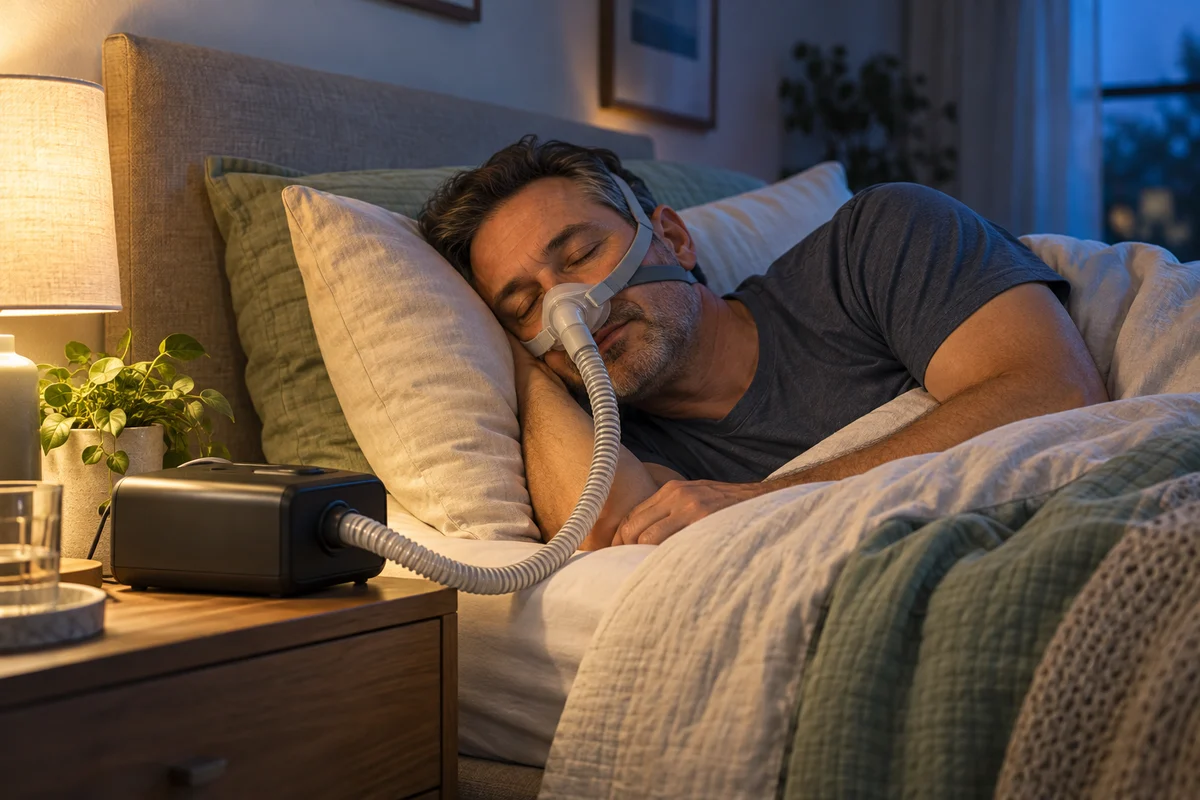
Treatment aims to reduce breathing disturbances and their consequences. One of the most widely used and effective options is continuous positive airway pressure, or CPAP.
During sleep, a machine supplies pressurized air through a mask. This helps hold the upper airway open and prevents repeated obstruction. CPAP uses air pressure; it is not simply an oxygen mask.
Consistent use can reduce breathing interruptions, improve overnight oxygen levels and ease daytime sleepiness. It can improve sleep-related quality of life and lower blood pressure in some people.
The 2026 ERS/ESRS guideline strongly recommends CPAP for people with excessive daytime sleepiness and gives more individualized recommendations for other patient groups. The 2025 U.S. blood pressure guideline also recognizes a role for CPAP in selected patients with resistant hypertension and moderate-to-severe OSA.
These established benefits should be distinguished from a guarantee of preventing heart attack, stroke or early death. Randomized trials have not consistently demonstrated those outcomes across all patient groups. Symptoms, underlying health, the type of OSA and how consistently treatment is used all matter when discussing likely benefits.
This uncertainty is not a reason to stop prescribed treatment. If the mask is uncomfortable or treatment is difficult to use, contact your sleep care team. Checking fit, settings and other problems can help make therapy workable.
Depending on your findings and preferences, other options may include a fitted oral appliance, weight management when appropriate, regular physical activity, avoiding alcohol close to bedtime and sleeping on your side if the obstruction is position-dependent. Selected patients may benefit from surgery or other specialist treatments.
The plan should be individualized and its effectiveness checked. Lifestyle changes can support care, but they do not automatically replace a prescribed device.
When should you talk to a doctor?
Frequent loud snoring, waking up choking or gasping, and pauses in breathing noticed by someone else are reasons to discuss OSA with your primary care doctor.
Other possible symptoms include:
- persistent daytime sleepiness or fatigue;
- morning headaches;
- difficulty concentrating;
- irritability or mood changes;
- frequent awakenings and sleep that does not feel restorative.
Not everyone with OSA has all of these symptoms, and snoring alone does not establish the diagnosis.
Your doctor may refer you to a sleep specialist. Testing may involve a home sleep apnea test or an overnight laboratory sleep study called polysomnography. The right test depends on your symptoms and other conditions. A negative or inconclusive home test may need follow-up laboratory testing.
If OSA has already been diagnosed but symptoms continue during treatment, tell your clinician. Treatment effectiveness, device use and other possible causes of sleepiness may need reassessment.
If someone is unresponsive and is not breathing normally, or is only gasping, call 911 in the U.S. or your local emergency number immediately, begin CPR and use an AED if available. Follow the dispatcher's instructions. Do not assume this is an ordinary sleep apnea episode.
Take breathing pauses seriously—and get them assessed
Repeated breathing interruptions are more than a snoring problem. Untreated OSA can affect cardiovascular health, sleep quality and daytime safety, and severe disease is associated with a higher risk of premature death.
At the same time, OSA can be diagnosed and treated. Appropriate care can improve breathing, alertness and quality of life while helping manage associated risks.
Loud snoring, witnessed breathing pauses and persistent daytime sleepiness deserve attention. A conversation with your primary care doctor is a practical place to start.
Original material by Evita Liepa. English translation and evidence-based editorial clarifications by VitalMeGuide. Review of this adapted English version by the original author has not been confirmed.
Read the sources
- Yeghiazarians et al. · Obstructive sleep apnea and cardiovascular disease: AHA scientific statement (2021)
- Patil et al. · AASM guideline on positive airway pressure treatment (2019)
- Testelmans et al. · ERS/ESRS clinical practice guideline for CPAP in adult obstructive sleep apnea (2026)
- AHA/ACC and partner organizations · Guideline for high blood pressure in adults (2025)
- NHLBI · Sleep apnea symptoms
- NHLBI · Sleep apnea diagnosis
- NHLBI · Sleep apnea treatment
- Gottlieb and Punjabi · Diagnosis and management of obstructive sleep apnea, JAMA (2020)
- Punjabi et al. · Sleep-disordered breathing and mortality: prospective cohort study (2009)
- Redline et al. · Obstructive sleep apnea and incident stroke: Sleep Heart Health Study (2010)
- Mehra et al. · Sleep-disordered breathing and cardiac arrhythmias: AHA scientific statement (2022)
- Lin et al. · Objective sleep duration and all-cause mortality among people with OSA (2023)
- McEvoy et al. · CPAP for prevention of cardiovascular events: SAVE trial (2016)
- American Thoracic Society · Sleep apnea, sleepiness and driving risk guideline (2013)
- AASM · Diagnostic testing for adult obstructive sleep apnea guideline (2017)
- American Heart Association · Emergency treatment of cardiac arrest
This article explains selected evidence. It is not a systematic review or individual medical advice.