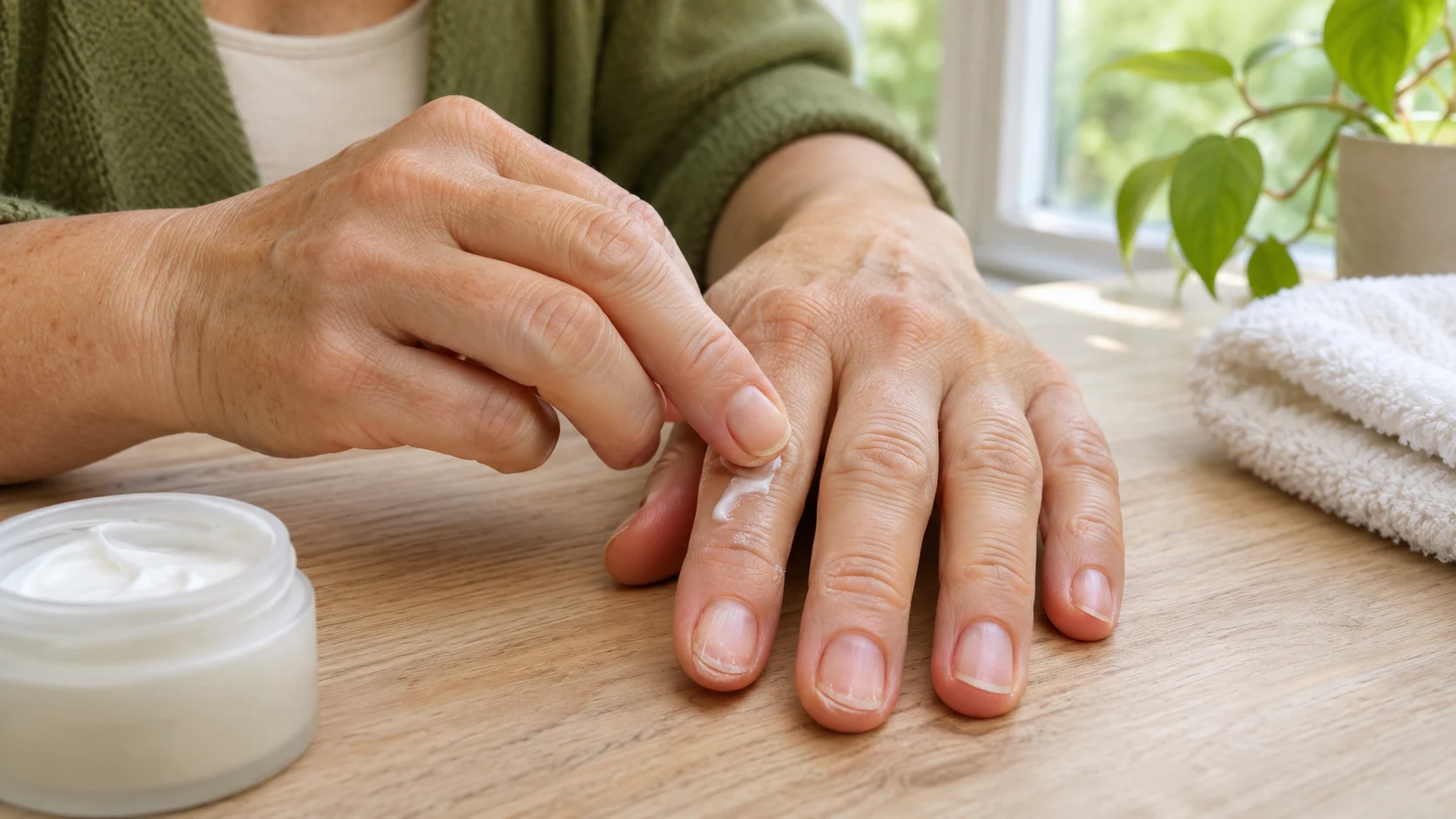
"Oh no, my nail has split again. Why does this keep happening?" It's a familiar frustration. Just as a nail begins to grow, the edge starts peeling. Sometimes a thin layer separates from the surface. Other times, a crack runs along the nail, catches on clothing, and becomes painful. It's tempting to assume your nails are simply weak and need more vitamins. But nutrition isn't always the explanation.
Brittle, splitting nails are a common problem, particularly among women. Dermatology literature suggests that brittle nail syndrome may affect up to one in five people, although estimates vary between populations. In many cases, repeated exposure to water, cleaning products, nail cosmetics, and everyday mechanical stress is responsible. Sometimes, however, splitting nails may be associated with psoriasis, a fungal infection, iron deficiency, thyroid disease, or another medical condition.
How can you tell ordinary nail brittleness from something that needs treatment? Does biotin really work? And what can you do to help your nails become stronger? First, it helps to understand how nails are built.
Understanding Nail Anatomy
A nail is more than a hard surface at the end of your finger. It's a complex anatomical structure with several parts that work together to support nail growth, strength, and protection. The visible portion is called the nail plate. It consists of tightly packed layers of keratinized cells. Its main structural protein is hard keratin. Keratin fibers and the bonds between them help give the nail both strength and flexibility.
The nail plate contains numerous microscopic layers. The precise number and thickness vary depending on the nail and how it is examined.
Where Do Nails Grow?
Most nail growth occurs in the nail matrix, the growth area beneath the base of the nail. New cells are continuously produced here and gradually become part of the nail plate. In some people, part of the matrix is visible as a pale, crescent-shaped area near the nail's base. This is called the lunula. Beneath the nail plate lies the nail bed, which helps support and anchor the plate to the finger.
The surrounding nail folds and cuticle form a protective barrier that helps shield the growing nail from the environment and microorganisms. These structures matter because overly aggressive manicures can damage the nail's natural protection.
Why Do We Need Nails?
Nails protect the sensitive tips of our fingers. They also help us pick up small objects, grasp thin materials, and perform precise movements. That does not mean they should be used to pry open containers or scrape surfaces. The nail plate provides counterpressure against the soft tissues of the fingertip, supporting touch and grip. Nails aren't merely cosmetic features. They perform practical functions every day.
What Do Healthy Nails Look Like?
Healthy nails are generally relatively smooth, firm, and even in color. The nail plate is translucent, so its color reflects the nail bed underneath. Normal color varies with skin tone; some people naturally have more pigmentation in their nails. However, normal nail appearance varies. Some people have fine vertical ridges that become more noticeable with age. These aren't necessarily signs of disease. Small white spots often result from minor trauma rather than a calcium deficiency.
Changes that deserve closer attention include sudden deformities, marked thickening, nail separation, pain, or persistent splitting of a single nail.
Why Do Nails Split in Different Ways?
Dermatologists distinguish between several forms of nail brittleness.
Nail Peeling (Onychoschizia)
With onychoschizia, the free edge of the nail separates into thin horizontal layers. The tip begins to peel, sometimes resembling several stacked sheets. This frequently occurs in people who wash their hands often, work in wet environments, or regularly use nail polish and removers.
Longitudinal Ridges and Splits (Onychorrhexis)
Onychorrhexis involves lengthwise ridges in the nail, sometimes accompanied by splitting. It may be associated with aging, changes in the nail matrix, or certain medical conditions.
A Single Nail That Keeps Splitting
If one nail repeatedly develops a crack in exactly the same place, it deserves particular attention. The cause may be a previous injury or localized damage to the nail matrix. Less commonly, a benign growth such as an onychopapilloma may be present beneath the nail or near its growth area. In rare cases, persistent changes can be caused by a more serious condition. That's why one nail that continually splits shouldn't automatically be blamed on vitamin deficiency.
What Makes Nails Strong?
Nail strength depends on the structure of keratin, the connections between cells, moisture content, and nail plate thickness. The nail plate also contains small amounts of lipids and minerals. Its water content changes depending on environmental humidity. When a nail becomes excessively dry, it may lose flexibility and break more easily. But prolonged soaking can also damage its structure. This explains why both dryness and repeated wetting can contribute to splitting. The health of the nail matrix matters too.
When the matrix is damaged, a new nail may grow with ridges, cracks, or other deformities. Persistent matrix damage can sometimes leave lasting changes.
Cause 1: Frequent Exposure to Water
Repeated contact with water is one of the most common causes of brittle nails. That may sound surprising. After all, water is essential for health, and moisturizing the skin is important. But the nail plate reacts differently to repeated soaking. When nails become wet, they absorb water and undergo small structural changes. As they dry, the moisture is lost again. If this cycle happens repeatedly throughout the day, the connections between layers of the nail plate can weaken. Eventually, the tips may begin to peel.
This is particularly common among people who frequently wash dishes, clean homes, or perform wet work. Healthcare professionals, food service workers, hairdressers, and other people whose hands get wet regularly may face greater exposure. Prolonged contact with hot water and detergents can make the problem worse.
Cause 2: Household Chemicals and Cleaning Products
Water isn't the only problem. Soaps, detergents, solvents, and other cleaning products can affect the nail surface. These substances help remove dirt and grease, but they can also strip away natural oils from the skin and nails. Nails may become drier, more brittle, and more likely to split. Repeated exposure to strong cleaning products without gloves can be especially damaging. However, reducing essential handwashing isn't the answer, particularly when infection prevention matters.
Instead, use gentle cleansers when practical, protect your hands during wet work, and moisturize regularly.
Cause 3: Nail Polish, Gel Manicures, and Polish Removers
Nail cosmetics can affect the condition of the nail plate. Often, the most important factor isn't just the polish itself but how it's applied and removed. Frequent use of polish removers may contribute to dryness. Aggressive filing can reduce the thickness of the nail plate. When gel polish is peeled or scraped off forcefully, layers of the natural nail may come away with it. Afterward, the nail can become thinner, more sensitive, and more likely to crack.
Are Acetone-Free Removers Always Better?
Not necessarily. Acetone is an effective solvent that can dry the nail and surrounding skin. However, acetone-free removers contain other solvents that may also cause dryness or irritation. The label alone doesn't tell the whole story. Frequency of use, the product's formulation, and the removal technique all matter. If your nails are already brittle, consider taking a break from intensive nail treatments.
Can Gel Manicures Cause Allergies?
Yes. Certain acrylates used in nail products can cause allergic contact dermatitis. Symptoms may include redness, itching, peeling skin, swelling, and changes in the nails. Occasionally, skin symptoms appear away from the fingertips as well. If irritation or nail damage repeatedly develops after manicures, a dermatologist can evaluate whether contact allergy may be involved.
Cause 4: Repeated Mechanical Trauma
Everyday habits can also damage nails. Examples include repeatedly tapping the nail against a desk, scraping hard surfaces, or using fingernails as tools. Some people unconsciously pick at or rub the base of their nails. Repeated trauma can lead to deformities, including lengthwise ridging. Aggressive pushing back of the cuticle can have similar effects.
Why Do Toenails Become Damaged?
Toenails are frequently affected by pressure and friction. When shoes are too narrow or feet slide forward, toes repeatedly strike the inside of the shoe. This is especially relevant for runners, soccer players, dancers, and other physically active people. The resulting injuries may cause thickening, discoloration, separation, or brittleness. Sometimes horizontal grooves called Beau's lines appear. However, these grooves can also develop after a serious illness or a temporary interruption in nail growth. They aren't always caused by sports or footwear.
Cause 5: Aging and Hormonal Changes
Nail structure can change with age. Fingernail growth generally slows over time, and vertical ridges and brittleness may become more common. Some people's nails become thinner, while others develop thicker nails, particularly on the toes. These changes aren't identical for everyone. Women may also notice increased nail brittleness during perimenopause or menopause. Hormonal changes can affect the skin and its ability to retain moisture. However, there isn't sufficient evidence to conclude that every case of splitting nails during menopause is directly caused by declining estrogen.
Several factors may overlap during midlife, including aging, dry hands, repeated water exposure, and other medical conditions.
Cause 6: Nail Psoriasis
Psoriasis is an inflammatory condition that can affect nails as well as skin. Some people have significant nail changes even when their skin symptoms are mild. Psoriasis can affect the nail matrix or nail bed. It may cause tiny pits on the surface, yellowish or brownish discoloration, thickening, and separation of the nail plate. The nail may become brittle and begin to crumble. One nail, several nails, or many fingernails and toenails may be involved.
Nail psoriasis can sometimes be difficult to distinguish from a fungal infection. The two conditions may also occur together. Treatment therefore shouldn't be selected based on appearance alone.
Cause 7: Fungal Nail Infections
A fungal nail infection, known as onychomycosis, can cause nails to thicken, change color, become brittle, and crumble. It affects toenails more commonly than fingernails. Typical signs may include yellow or white discoloration, a thickened nail plate, a crumbly edge, and buildup beneath the nail. The nail may also separate from its bed. However, these changes aren't unique to fungal infections. Psoriasis, chronic trauma, and other nail disorders can look similar.
For that reason, testing nail material helps confirm the diagnosis, particularly before prescribing oral antifungal medication.
Cause 8: Iron Deficiency and Anemia
Certain nutrient deficiencies can also affect nail health. One important example is iron deficiency. Iron is necessary for producing hemoglobin and supporting numerous cellular processes. Iron deficiency anemia may cause fatigue, weakness, pale skin, shortness of breath during activity, and other symptoms. Some people also develop nail changes. Severe or longstanding iron deficiency may occasionally be associated with spoon-shaped nails, a condition called koilonychia. However, brittle nails alone do not prove that someone has an iron deficiency.
If deficiency is suspected, a healthcare professional may order a complete blood count, ferritin test, and other appropriate studies. Iron supplements shouldn't be started simply because nails are splitting. Excess iron can be harmful.
Cause 9: Thyroid Disorders
Thyroid hormones influence many processes throughout the body. When the thyroid gland produces too little hormone, the condition is called hypothyroidism. It may cause fatigue, sensitivity to cold, dry skin, constipation, and other symptoms. Some people also develop dry, brittle nails. An overactive thyroid can sometimes be associated with separation of the nail from its bed. If nail problems occur alongside symptoms suggestive of thyroid disease, a healthcare professional may recommend a TSH test and, when appropriate, additional testing.
However, not everyone with a single cracked nail needs thyroid blood tests.
Cause 10: Problems Absorbing Nutrients
Some digestive disorders interfere with the body's ability to absorb essential nutrients. Celiac disease, Crohn's disease, and certain chronic diarrhea or malabsorption conditions can contribute to deficiencies in vitamins and minerals. When nutrients are lacking over time, skin, hair, and nail health may also be affected. However, these conditions generally need to be considered in the context of broader symptoms. Nail splitting alone isn't enough to suspect celiac disease or Crohn's disease.
Cause 11: Poor Circulation
Like other living tissues, the nail matrix needs an adequate blood supply. Significant peripheral circulation problems can affect fingertip tissues and nail growth. These may be accompanied by cold fingers, pain, color changes, or wounds that heal poorly. However, ordinary nail splitting without other symptoms is usually not evidence of poor circulation. If fingers repeatedly turn markedly white or blue, become painful, or develop tissue damage, medical evaluation is important.
Cause 12: Medication Effects
Some medications can alter nail growth and structure. Nail changes are especially well recognized during certain cancer treatments. Chemotherapy and some targeted therapies can cause brittleness, discoloration, nail separation, or inflammation around the nails. Retinoid medications, used for certain severe forms of acne, can also affect nails and surrounding skin. A new nail problem should not automatically be attributed to medication; other causes may need to be considered. If nail changes begin after starting a new medication, discuss them with your healthcare professional.
Never stop a prescribed medication on your own because your nails have become brittle.
Do Nails Need Extra Vitamins?
Nails grow from living cells in the nail matrix, and those cells need nutrients to function properly. Protein is important for keratin production. Iron, zinc, and various vitamins also contribute to normal cellular processes. But that doesn't mean taking additional vitamins will strengthen nails in someone who has no deficiency. If your diet is balanced and no deficiency is present, the benefits of supplements marketed for hair and nails are often uncertain.
Does Biotin Really Help?
Biotin, also called vitamin B7, is one of the most popular ingredients in supplements marketed for hair and nails. Some small studies have suggested improvements in nail brittleness with biotin. However, the evidence is limited, and high-quality research supporting routine use is lacking. Biotin deficiency is relatively uncommon. For people who already get enough biotin, taking high doses may offer no additional benefit. There is also an important safety concern. High doses of biotin can interfere with certain laboratory test results.
These include some thyroid tests and certain troponin tests used to detect heart muscle injury. Tell your healthcare team and laboratory if you take biotin, including supplements marketed for hair and nails. Ask whether and when it should be paused before a planned test; the answer depends on the dose and test. Do not delay emergency care to wait for biotin to leave your system.
What About Collagen Supplements?
Collagen supplements are often marketed for skin, hair, and nail health. A few small studies have suggested possible benefits, but the evidence is insufficient to consider collagen a standard treatment for brittle nails. Getting enough protein and treating an identified deficiency are more important.
Do Omega-3 and Zinc Help?
Omega-3 fatty acids and zinc are essential nutrients. However, convincing evidence is lacking that taking large supplemental doses improves brittle nails in people without deficiencies. Excess zinc intake can cause copper deficiency and other problems. Vitamin and mineral supplements should therefore be chosen according to individual needs.
How Does a Dermatologist Diagnose Splitting Nails?
Splitting nails are a symptom, not a diagnosis. A dermatologist first examines the pattern of nail damage. Does the splitting occur at the free edge or run lengthwise through the nail? The doctor also assesses nail thickness, color, surface changes, and whether the plate has lifted from the bed. The surrounding skin and other fingernails and toenails are examined as well. Medical history matters.
Did the problem begin after a gel manicure? Does the person perform frequent wet work? Is there a history of psoriasis or repeated trauma? In many cases, a thorough examination and medical history are enough to identify the most likely cause.
When Are Blood Tests Needed?
If symptoms suggest anemia, thyroid disease, or a nutrient deficiency, a healthcare professional may recommend appropriate blood tests. However, not everyone needs the same extensive laboratory panel. Testing should be guided by symptoms and clinical findings.
How Are Fungal Nail Infections Tested?
If a fungal infection is suspected, a dermatologist may collect nail clippings or material from underneath the nail. Several testing methods are available. One is direct microscopic examination. Another is fungal culture, which may help identify the organism responsible. Special staining of nail material or molecular testing using PCR may also be used. Each method has advantages and limitations. PCR can sometimes provide results more quickly, but the fungi detected depend on the specific assay. Cultures may take longer.
It's important to tell your clinician about any antifungal medications you've used because they can affect test results. Avoid cutting the affected nail extremely short or aggressively cleaning it immediately before an appointment unless the clinic instructs you otherwise.
When Is a Nail Biopsy Necessary?
Most cases of brittle nails do not require a biopsy. However, a biopsy may be considered when the diagnosis remains unclear or a tumor or nail matrix disorder is suspected. During a biopsy, a specialist removes a small tissue sample for laboratory examination. Because nail anatomy is complex, the procedure requires careful planning to minimize the risk of scarring or permanent nail deformity.
Which Nail Changes Should Never Be Ignored?
A new dark vertical streak, or an existing streak that becomes wider or changes, deserves a dermatologist’s assessment. Pigment spreading onto the skin beside the nail is another warning sign. Unexplained bleeding, a growing lesion, pain, or persistent deformity around a nail should also be examined. In rare cases, such findings may be associated with tumors of the nail unit, including melanoma. This doesn't mean every dark streak is cancer. However, potentially concerning changes shouldn't simply be covered with nail polish and ignored.
How Can You Make Your Nails Stronger?
For most people with ordinary nail brittleness, treatment begins with changes in everyday habits. The priority is protecting the nail plate from repeated moisture exposure, chemicals, and physical damage.
1. Wear Gloves During Wet Work
Use protective gloves when washing dishes or cleaning your home. If you work for long periods and your hands sweat, thin cotton gloves beneath appropriate waterproof gloves may help. This limits direct exposure to water and cleaning agents. However, avoid keeping your hands inside damp, sealed gloves for extended periods. Remove them periodically when possible, dry your hands, and allow your skin to recover.
2. Moisturize Your Hands Regularly
Some people focus only on their cuticles, applying nail oils throughout the day. But dry nails often occur alongside dry skin on the hands. That's why dermatologists frequently recommend a good moisturizing hand cream. Products containing glycerin, petrolatum, ceramides, or other moisturizing and protective ingredients may be helpful. Apply moisturizer after washing your hands and before bedtime. Pay particular attention to the nails and surrounding skin. Nail oils can complement this routine but aren't necessarily superior to a suitable cream.
3. Reduce Aggressive Manicures
If your nails are peeling, consider taking a break from frequent gel manicures. Don't peel off polish or artificial nail products. Excessive buffing can thin the natural nail plate. When you do get a manicure, gentle techniques and appropriate tools are essential.
4. Do Nail Hardeners Work?
Drugstores and beauty retailers offer a wide range of nail hardeners, strengthening polishes, serums, and protective coatings. Some create a film that may reduce mechanical damage. Others contain moisturizing or nail-hardening ingredients. These products may improve the appearance of nails or reduce breakage for some people. However, many cosmetic products have not been evaluated in high-quality independent clinical trials. Overly aggressive nail hardeners, especially certain formaldehyde-containing products, may cause irritation or make nails more brittle. Choose products carefully.
And remember that a cosmetic coating won't cure an underlying fungal infection, psoriasis, or iron deficiency.
5. Don't Trim Nails Too Short
Keeping nails reasonably short helps prevent catching and breakage. However, avoid cutting all the way down to the sensitive nail bed. This can cause pain and damage the protective tissues. Toenails should generally be trimmed relatively straight across, particularly if you're prone to ingrown nails. Use a suitable nail file to gently smooth rough edges.
6. Protect Your Cuticles
The cuticle helps protect the base of the nail from microorganisms. Aggressively cutting or pushing it back can increase the risk of irritation, infection, and injury. If the surrounding skin is dry, moisturize it regularly instead. Avoid forcibly separating the cuticle from the nail.
7. Don't Clean Under Nails With Sharp Objects
Toothpicks, metal implements, and other sharp objects can injure the nail bed. Repeated aggressive cleaning may contribute to nail separation. Gentle washing is generally enough for routine hygiene. A soft nail brush may help when needed.
8. Pay Attention to Nutrition
A balanced diet supports normal nail growth. Aim for sufficient protein, vegetables, fruits, whole grains, and other nutrient-rich foods. If your diet is highly restrictive or you suspect a deficiency, discuss it with a healthcare professional. There's usually no need to buy several vitamin complexes automatically because your nails are brittle.
How Long Does It Take for Nails to Recover?
The nail plate consists of keratinized cells that are no longer living. As a result, an already damaged portion of the nail cannot repair itself in the same way skin heals after a small injury. Visible improvement occurs as healthier nail grows outward from the matrix. Fingernails grow at an average rate of approximately 3 millimeters per month, although individual rates vary. Complete replacement of a fingernail usually takes several months.
Toenails grow more slowly and may take a year or longer to grow out fully. That's why you shouldn't expect dramatic improvement within a few days of using a cream or strengthening polish. The important thing is to consistently address the underlying cause.
When Should You See a Dermatologist?
An occasional split nail following a minor injury usually isn't alarming. However, medical evaluation is appropriate when splitting persists, worsens, or affects multiple nails without an obvious cause. See a dermatologist especially if:
- One nail repeatedly splits in the same location.
- A nail becomes markedly thickened or separates from its bed.
- Pain, swelling, redness, or pus develops.
- An unusual growth appears around or beneath a nail.
- A new or changing dark streak appears.
- Nail changes occur with significant fatigue, sensitivity to cold, pale skin, or other systemic symptoms.
Seek prompt medical care for pus, spreading redness, rapidly worsening swelling, or severe pain. People with diabetes, poor circulation, or a weakened immune system should seek advice early about an injured or infected nail.
A Practical Place to Start
Protect your hands during wet work, moisturize after washing, and give damaged nails a break from aggressive manicures. These habits will not repair an existing split, but they can reduce further damage as the nail grows out. If one nail keeps splitting in the same place, or you notice pain, nail separation, a new dark streak, or other unusual changes, see a dermatologist. Finding the cause is more useful than repeatedly buying another strengthening product.
Adapted from material by dermatologist Dr. Alise Balcere, with additional research and editing by VitalMeGuide. This version does not imply a separate medical review by Dr. Balcere. General health information cannot replace individual medical advice.
Read the sources
- Chessa MA, Iorizzo M, Richert B, et al. Pathogenesis, Clinical Signs and Treatment Recommendations in Brittle Nails: A Review. Dermatol Ther (Heidelb). 2020;10:15–27. doi:10.1007/s13555-019-00338-x.
- Canadian Dermatology Association. Brittle Nails.
- Lee DK, Lipner SR. Optimal diagnosis and management of common nail disorders. Ann Med. 2022;54(1):694–712. doi:10.1080/07853890.2022.2044511.
- American Academy of Dermatology (AAD). Nail Fungus: Diagnosis and Treatment.
- American Academy of Dermatology. 12 Nail Changes a Dermatologist Should Examine.
- National Institutes of Health, Office of Dietary Supplements. Biotin — Fact Sheet for Health Professionals.
- U.S. Food and Drug Administration (FDA). Biotin Interference With Troponin Lab Tests.
- MedlinePlus. Nail Abnormalities.
- Albucker SJ, Conway J, Lipner SR. Nails in older adults. Ann Med. 2024;56(1):2336989. doi:10.1080/07853890.2024.2336989.
- British Association of Dermatologists. Fungal Nail Infections.
- Ameen M, Alband N, Bhatti K, et al. British Association of Dermatologists guideline for managing fungal nail infection (onychomycosis) 2026. Br J Dermatol. 2026;195(6):920–929. doi:10.1093/bjd/ljag318.
- Merck Manual Professional Edition. Nail Dystrophies.
This article explains selected evidence. It is not a systematic review or individual medical advice.