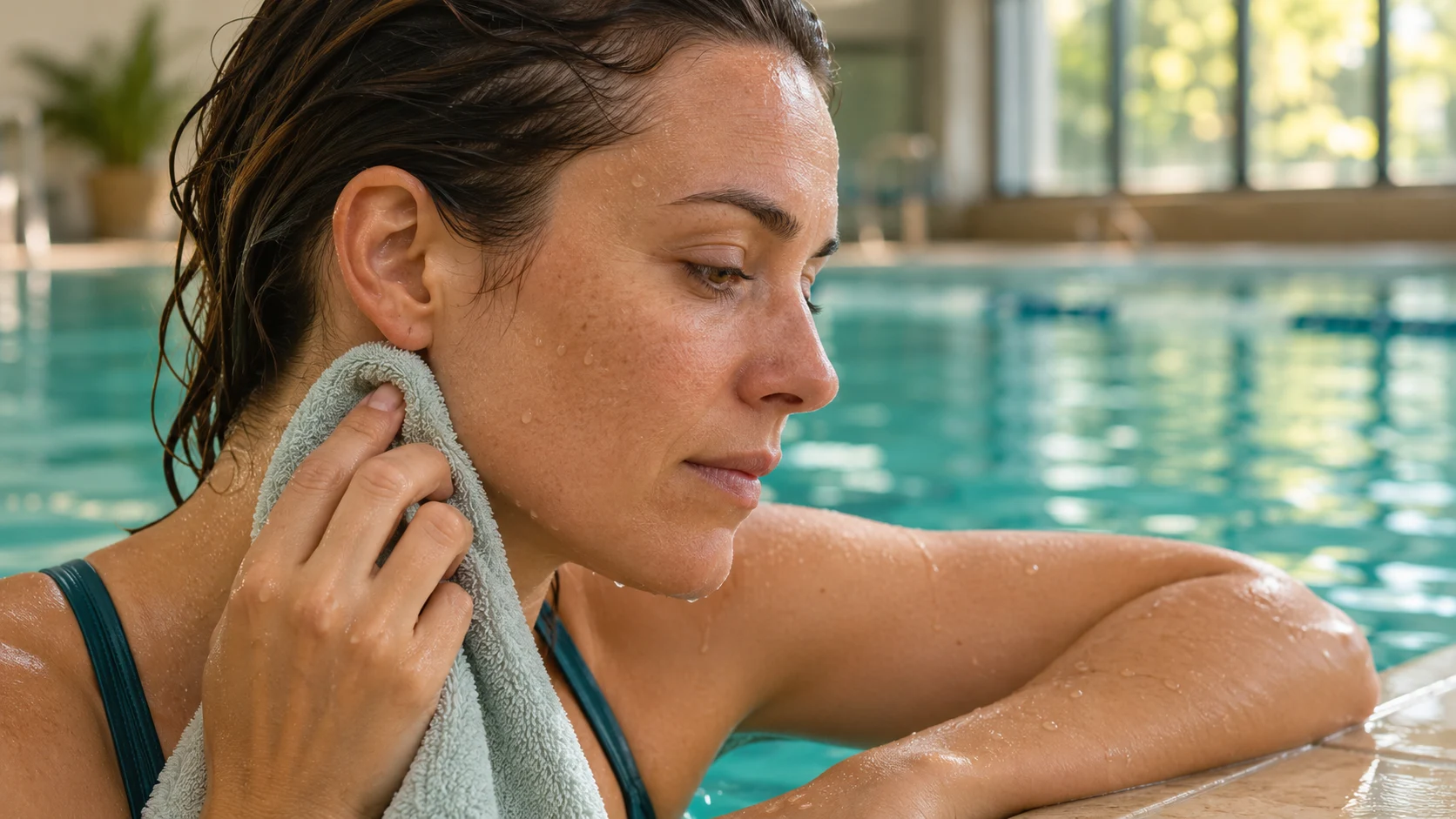
The morning after a swim, one ear feels plugged. You reach for a towel, brush the outside of the ear and wince. Even chewing breakfast hurts. It’s tempting to reach for a cotton swab to get the last bit of water out. Leave the swab in the cabinet. That tenderness can mean the skin inside the ear canal is already inflamed.
How can a swim lead to an earache?
The ear canal runs from the opening of your ear to your eardrum. A thin layer of skin lines it. Earwax traps debris and helps keep the canal slightly acidic, which makes it harder for bacteria to grow. When water stays in the canal, the skin softens. Scratching an itch or rubbing the canal with a swab can leave tiny breaks in that protective layer.
Bacteria can then infect the skin. Doctors call this acute otitis externa, or swimmer’s ear. It can follow a shower as well as a swim. Eczema and other skin conditions can make the canal more vulnerable, and snug earbuds or plugs can rub skin that is already irritated. If an earbud hurts, give the ear a break. A cold breeze after a swim may feel uncomfortable, but trapped moisture and irritated skin better explain how the infection starts.
How do I know whether it’s more than trapped water?
Itching and a full feeling may come first. A typical clue is pain when the outer ear moves or when you touch the small flap of cartilage just in front of the opening. The canal can swell, leak fluid or become so narrow that sounds seem muffled. Even a small amount of swelling can hurt in that tight space.
A middle ear infection develops behind the eardrum and often follows a cold. Moving the outer ear is less likely to hurt. These clues help a clinician decide what to look for. An exam with a lighted instrument called an otoscope shows whether the problem is in the canal or behind the eardrum.
When should I get help?
Contact a healthcare professional if you develop ear pain or drainage. Seek urgent care the same day if pain is severe or rapidly worsening, redness or swelling spreads toward your face or neck, the area behind your ear becomes swollen or tender, or you have a fever and feel very unwell. Sudden hearing loss or new facial weakness also needs urgent assessment.
If you have diabetes or a weakened immune system, seek advice promptly, especially for deep, persistent pain that keeps you awake at night. Rarely, an infection can spread from the ear canal into nearby bone. Early assessment matters in that situation.
What can I do while my ear hurts?
Keep it dry, skip swimming, and leave the canal alone. Avoid flushing it or putting in oil, rubbing alcohol, vinegar, peroxide or someone else’s ear drops. Some preparations can harm hearing if the eardrum has a hole or an ear tube allows liquid to pass through it. If acetaminophen or ibuprofen is safe for you, either can help with pain when used as directed on the label.
Cotton swabs can scrape tender skin, pack wax deeper or injure the eardrum. Normally, wax moves outward on its own. If an ear stays plugged, a clinician can check for swelling or impacted wax. The same hands-off advice applies if you suspect an insect or another object is inside: have it examined rather than trying to retrieve it with tweezers or wash it out.
How is swimmer’s ear treated?
For an uncomplicated bacterial infection, prescription ear drops usually deliver the medicine right where it is needed. Some combine an antibiotic with a steroid to ease inflammation. Tell the prescriber if you have ear tubes, have had ear surgery or know you have a perforated eardrum. That affects which drops are safe.
If swelling blocks the drops, a clinician may gently clear the canal or place a small absorbent wick to carry the medicine in. Oral antibiotics are usually reserved for infection that extends beyond the canal or for people with particular risk factors. A routine case can generally be diagnosed without blood tests or a scan.
Use the drops for the full prescribed course, often seven to ten days. If you haven’t started to feel better after 48 to 72 hours of treatment, contact the clinician again. Seek help sooner if symptoms worsen. The drops may be failing to reach the skin, or the ear may need a different treatment.
Could it be a fungus or eczema instead?
Yes. Bacteria cause most acute infections, but fungi such as Aspergillus or Candida can also grow in the canal. Itching can be especially bothersome with a fungal infection, although symptoms overlap. The color of the drainage alone won’t tell you which medicine to use.
A clinician may remove debris, examine the canal more closely and prescribe an antifungal if needed. Ciprofloxacin, an antibiotic used in some ear drops, treats susceptible bacteria and will not clear a fungal infection. Recurrent itching in both ears can also come from eczema or contact dermatitis. Treating that underlying irritation may help prevent another episode.
How should I dry my ears after swimming?
- Tilt your head so one ear faces down. Gently tug the earlobe in different directions to let water drain, then repeat on the other side.
- Pat the outside of each ear with a soft towel. Keep the towel tip outside the opening.
- If water still lingers, use a hair dryer on its lowest heat and fan settings, held several inches from the ear. Stop if the air feels hot or uncomfortable.
If swimmer’s ear keeps coming back, ask about a swim cap, comfortable swim plugs or custom-fitted molds. A plug that rubs or hurts is a poor fit. Wait until the infection has cleared before getting back in the water. Ask a clinician before using preventive drying drops. Avoid them if you have tubes, a hole in the eardrum, drainage or an active infection.
After an ordinary swim, tilting your head and toweling the outside is usually enough. If what started as a little trapped water begins to hurt, put the towel down and get the ear checked.
Read the sources
- American Academy of Otolaryngology–Head and Neck Surgery Foundation (AAO-HNSF). Clinical Practice Guideline: Acute Otitis Externa (Update). Otolaryngology–Head and Neck Surgery, 2014.
- Rosenfeld, R. M., et al. (2014). Clinical Practice Guideline: Acute Otitis Externa. Otolaryngology–Head and Neck Surgery.
- Centers for Disease Control and Prevention (CDC). Preventing Swimmer's Ear.
- Merck Manual Professional Edition. External Otitis (Acute).
- NHS England, Getting It Right First Time (GIRFT). (2025). Ear, Nose and Throat Referral Guidelines for Adults.
- American Academy of Otolaryngology–Head and Neck Surgery Foundation. Clinical Practice Guideline: Acute Otitis Externa — Executive Summary.
- NHS Cornwall. Otitis Externa: Primary Care Clinical Referral Criteria.
This article explains selected evidence. It is not a systematic review or individual medical advice.