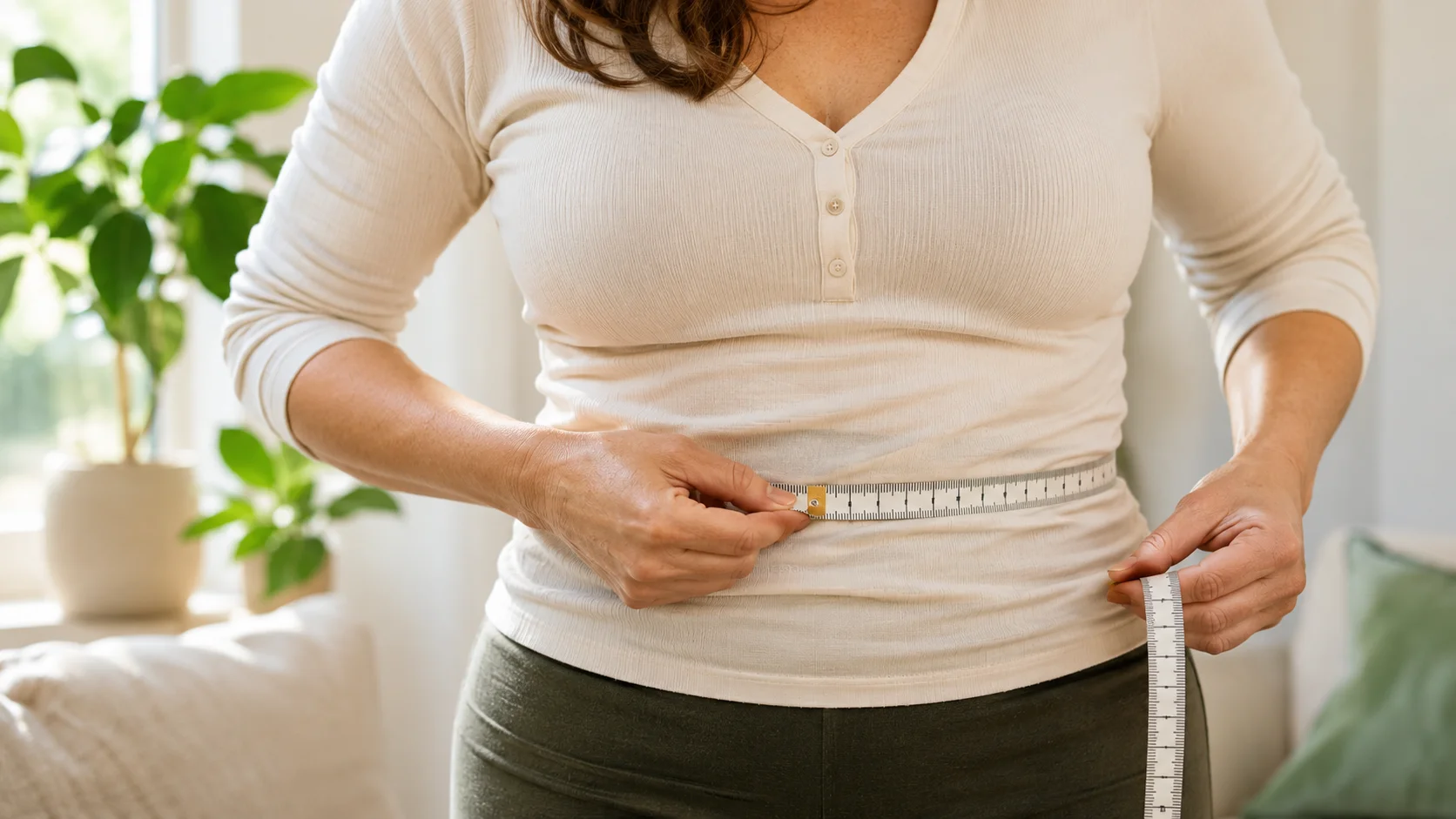
Your weight has barely changed, but the waistband of your favorite jeans feels tighter. Is that worth mentioning at your next checkup? A waist measurement can add something useful to the conversation: it gives a rough idea of how much fat is carried around the abdomen. Two people of the same height and weight can have quite different waist measurements, blood sugar levels and blood pressure.
What is visceral fat?
The soft layer you can pinch sits just beneath the skin and is called subcutaneous fat. Visceral fat lies deeper, around organs inside the abdomen. Both contribute to the size of your waist. A tape measure cannot separate them or tell you exactly how much visceral fat you have. CT and MRI can distinguish these tissues, but most people do not need a scan to assess their metabolic risk.
Fat tissue stores energy and sends chemical signals throughout the body. When excess fat accumulates deep in the abdomen, fatty acids and inflammatory signals can affect how the liver and other tissues respond to insulin. The pancreas may initially compensate by producing more insulin. Over time, blood sugar can rise. This helps explain why a larger waist is associated with type 2 diabetes, higher triglycerides and fatty liver disease, even among people with similar body mass index (BMI).
How do you measure your waist at home?
For the waist-to-height method below, use a flexible, nonstretch tape. Stand comfortably, find the bottom of your ribs and the top of your hip bones, and place the tape halfway between them. Measure around bare skin if possible. Keep the tape level and snug enough to stay in place without pressing into your skin. Let your breath out normally and read the number without pulling in your stomach.
Some U.S. clinics measure just above the hip bones. The two sites can give different numbers. If you track changes over time, use the same spot each time and tell your clinician how you measured. A clothing size is a poor substitute because waistbands sit at different heights and vary by brand.
What does the waist-to-height ratio tell you?
Divide your waist measurement by your height, using the same units for both. For example, a 34-inch waist divided by a height of 68 inches gives 0.50. You’ll get the same result in centimeters.
For adults with a BMI below 35, the UK’s NICE guideline uses a ratio of 0.50 to below 0.60 to flag increased risk associated with abdominal fat, and 0.60 or higher to flag a further increase. Half your height is a useful reference point. Risk changes gradually, so a reading just above or below that line should be interpreted alongside your other health information.
Another commonly used U.S. reference is a waist over 35 inches (about 89 cm) for women or over 40 inches (about 102 cm) for men. Risk can rise at smaller measurements in some populations. These cutoffs are screening tools for adults and do not apply during pregnancy. Neither the ratio nor a waist measurement diagnoses diabetes or fatty liver disease.
Why might your waist change while your weight stays steady?
Age, genetics and hormones influence where fat is stored. Around menopause, fat may shift toward the abdomen. A gradual loss of muscle can also offset a gain in fat on the scale. Short sleep and prolonged stress can make eating and activity routines harder to maintain. Waist shape alone cannot tell you whether your cortisol is high.
A change over a few days deserves a different interpretation from a trend over months. Bloating, for example, can alter the measurement. New, persistent or rapidly increasing abdominal swelling, particularly with pain, deserves medical assessment.
What helps reduce visceral fat?
Trials of aerobic exercise in adults with overweight or obesity have found reductions in waist size and visceral fat. A brisk walk, cycling or swimming can all be practical options. If you have been inactive, start with a duration you can repeat comfortably. A ten-minute walk after lunch is one way to build toward the U.S. adult target of at least 150 minutes of moderate activity a week, alongside muscle-strengthening activity on two days. Abdominal exercises strengthen the muscles you use, but they cannot selectively remove the fat surrounding your organs.
For meals, choose a change that fits what you already eat. Add beans or vegetables to a familiar dish, or swap a regular sugary drink for water. If weight loss is appropriate for you, even a modest reduction can improve some metabolic measures. For people with fatty liver disease, the amount of weight loss needed to reduce liver fat may be smaller than the amount needed to improve inflammation or scarring. Your clinician can help set a realistic goal.
What should you ask at your next checkup?
Bring the measurement, where you took it and any trend you’ve noticed. Ask how it fits with your blood pressure, cholesterol, triglycerides and blood sugar. Depending on your history, your clinician may suggest an A1C or fasting glucose test or assess your risk for liver disease. If obesity medication is an option, that decision depends on your overall health, treatment goals and medical history. A tape measurement alone cannot determine whether you need it.
Based on material by Gita Erta, MD, endocrinologist. English adaptation by VitalMeGuide.
Read the sources
- American Diabetes Association / Obesity Association. (2026). Screening, Diagnosis, Evaluation, and Staging of Obesity in Adults: Standards of Care in Overweight and Obesity—2026.
- Rubino, F., et al. (2025). Definition and Diagnostic Criteria of Clinical Obesity. The Lancet Diabetes & Endocrinology, 13(3), 221–262.
- National Heart, Lung, and Blood Institute (NHLBI). Aim for a Healthy Weight.
- National Institute of Diabetes and Digestive and Kidney Diseases (NIDDK). Am I at a Healthy Weight?
- National Institute for Health and Care Excellence (NICE). Overweight and Obesity Management: Identifying and Assessing Central Adiposity.
- Chen, X., et al. (2024). Effects of Various Exercise Types on Visceral Adipose Tissue in Individuals With Overweight and Obesity: A Systematic Review and Network Meta-Analysis. Obesity Reviews.
- Jayedi A, et al. Aerobic Exercise and Weight Loss in Adults: A Systematic Review and Dose-Response Meta-Analysis. JAMA Network Open, 2024.
- Centers for Disease Control and Prevention (CDC). Adult Activity: An Overview.
- National Institute of Diabetes and Digestive and Kidney Diseases (NIDDK). Treatment for Nonalcoholic Fatty Liver Disease and Nonalcoholic Steatohepatitis.
- American Diabetes Association / Obesity Association. (2025). Pharmacologic Treatment of Obesity in Adults: Standards of Care in Overweight and Obesity.
- World Health Organization. (2025). Guideline on the Use and Indications of GLP-1 Therapies for the Treatment of Obesity in Adults.
This article explains selected evidence. It is not a systematic review or individual medical advice.