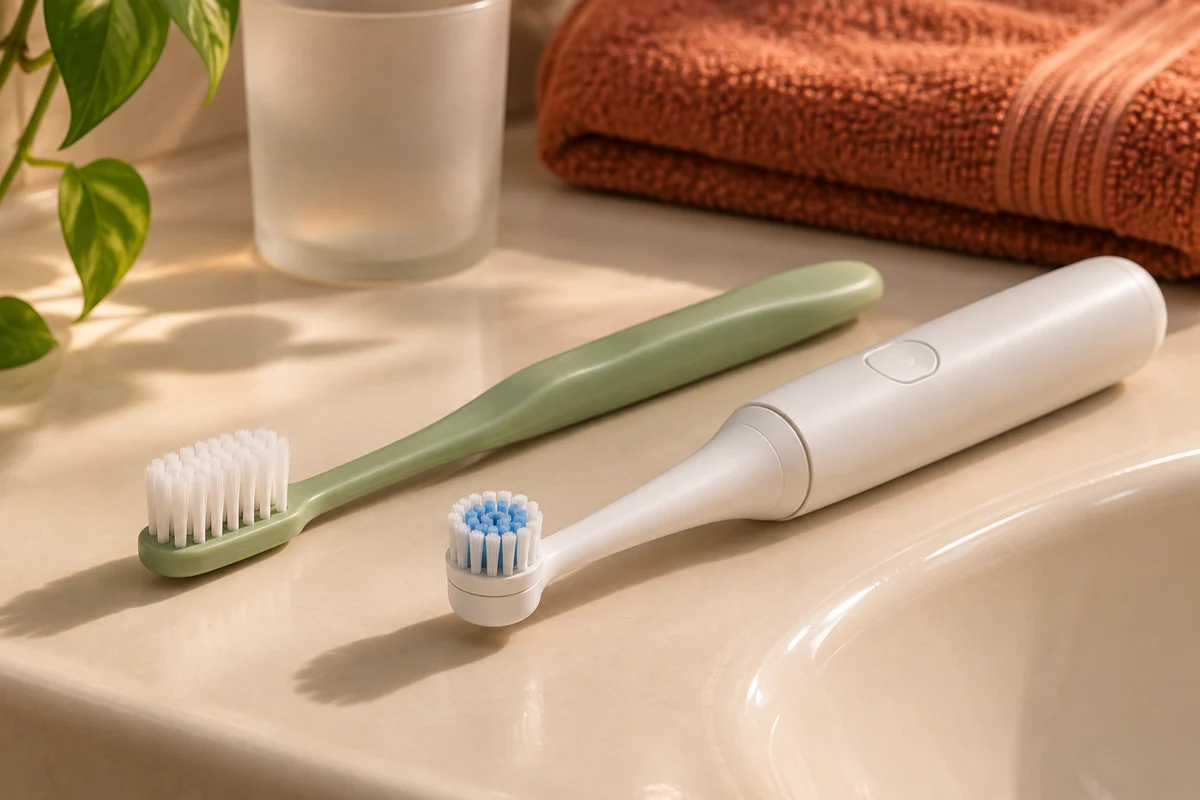
You get home late, fall asleep on the couch and wake up the next morning realizing you never brushed your teeth. Have you done any lasting harm? And would buying an electric toothbrush make much difference if you already brush carefully with a manual one?
These questions have something in common: what matters most is what happens to your teeth over time. Here’s what a good brushing routine looks like, starting with a baby’s first tooth.
Why do teeth need brushing?
Run your tongue over your teeth at the end of the day and you may feel a film. That’s plaque: a sticky community of bacteria, not simply bits of food. When you eat sugars or certain starches, bacteria in plaque produce acids that draw minerals out of the enamel. Saliva helps neutralize those acids and supplies minerals that can go back into the tooth. Fluoride helps that repair process.
If the tooth loses minerals faster than it replaces them, decay can develop. Brushing does two jobs at once: the bristles disturb the plaque, and fluoride toothpaste helps protect the enamel.
How to brush your teeth, step by step
Aim for about two minutes twice a day, including before bed. If you always start with your front teeth, try starting with your back molars tonight. It’s a simple way to notice which surfaces you usually rush past.
- Choose soft bristles. Use a head small enough to reach behind the last molar comfortably.
- Angle a manual brush toward the gumline. Set the bristles at about 45 degrees where the tooth meets the gum. Use light pressure; the bristles don’t need to splay.
- Use short, gentle strokes. Move a tooth-width at a time. For the inside surfaces of the front teeth, turn the brush upright and use gentle up-and-down strokes.
- Follow the same route each time. Brush the outside, inside and chewing surfaces of the upper and lower teeth. Include the tongue side of the back teeth.
- Give each quarter of the mouth about 30 seconds. Spit out the excess toothpaste when you’re done. Avoid rinsing immediately with a mouthful of water; it washes away some of the fluoride you just applied.
Electric or manual: which toothbrush works better?
A soft manual toothbrush can clean your teeth well. If your gums are healthy, you can reach every surface and your dentist or hygienist is happy with your technique, there’s no need to replace it with a powered model.
What the research actually measured
A Cochrane review included 56 trials comparing powered and manual brushes. After more than three months, the powered groups had lower plaque and gingivitis scores on average: about 21% lower for plaque and 11% lower for gum inflammation on the measures used. Those are changes in measured scores, not a promise that you personally will remove 21% more plaque or have 21% fewer cavities.
The review did not establish how much that difference matters for long-term outcomes such as tooth loss. For an individual, the more useful question is: which brush helps you clean the gumline and back teeth thoroughly, twice a day?
What types of electric brushes are there?
Oscillating-rotating brushes
These usually have a small, round head that turns back and forth. Guide it slowly from tooth to tooth, following the gumline and the shape of each surface. Let the head do the work rather than adding a hard scrubbing motion.
Sonic brushes
The head vibrates rapidly. You still need to guide the bristles over each surface; the vibration cannot clean a back tooth you skip. Follow the instructions for your particular brush. Both designs can work well.
Is an expensive electric toothbrush worth it?
If you usually finish in 40 seconds, a two-minute timer may earn its keep. If your bristles flatten quickly, a pressure sensor can show you when to ease off. A phone app and extra modes are optional. Also check what replacement heads cost: you’ll be buying those long after you’ve paid for the handle.
Who might find an electric brush especially useful?
If arthritis or another condition makes small hand movements difficult, a thicker handle and a moving head may make brushing easier. A timer can help anyone who rushes. Some children like a powered brush enough to cooperate with brushing; others dislike the vibration. Either way, the brush still needs someone to guide it.
When should you start brushing a child’s teeth?
Start when the first tooth appears, often around six months but sometimes earlier or later. Use a small, soft brush and fluoride toothpaste twice a day. Baby teeth help a child chew, speak and hold space for adult teeth. A cavity in a baby tooth can hurt or become infected well before the tooth is ready to fall out.
How much fluoride toothpaste should you use?
- From the first tooth until the third birthday: an adult applies a thin smear about the size of a grain of rice.
- From ages 3 through 6: use a pea-sized amount. Have the child spit out the excess as soon as they can.
- For older children: follow the label and the dentist’s advice. Continue to check that the child uses an appropriate amount and spits rather than swallowing.
A parent should dispense the paste for a young child. Regularly swallowing too much fluoride while the permanent teeth are developing increases the chance of dental fluorosis. Using the small amount recommended for the child’s age lets them benefit from fluoride while limiting how much they swallow.
Does a child need an electric brush?
No. A child-sized manual brush is plenty for the first teeth. If you switch to an electric one, choose a model labeled for the child’s age. Let a young child have a turn, then gently finish the job. Many children still need help or supervision around age 7 or 8, and some need it longer. Watch whether they can reach the gumline and the inside of the back teeth; a birthday alone won’t tell you when they’re ready.
What if you forget to brush one night?
A cavity doesn’t ordinarily appear overnight because you missed one brushing. Plaque does keep building, though, and you produce less saliva while asleep. That makes the bedtime brushing especially valuable, particularly after an evening snack or sweet drink.
The next morning, return to your usual routine. Don’t scrub twice as hard to make up for it. If tiredness keeps getting in the way, move brushing earlier: finish your last snack, brush, then stick to plain water for the rest of the evening.
When does tooth decay develop faster?
There’s no fixed countdown from a missed brushing to a cavity. Saliva, fluoride exposure, the tooth surface and eating habits all influence how often enamel loses minerals and how much time it has to recover.
Frequent sweets and snacks
Compare having dessert with lunch to eating a piece of candy every half hour through the afternoon. Even if the total sugar is similar, the second pattern gives bacteria repeated opportunities to produce acid. Frequency matters as well as quantity.
Sipping sweet drinks for hours
A sweetened coffee that lasts all morning exposes the teeth to sugar again and again. Soda and many energy drinks add another issue: their acidity can wear away enamel directly. That’s erosion. Decay involves acids made by plaque bacteria; erosion doesn’t require bacteria. A drink can contribute to both.
Plaque left in hard-to-reach places
The grooves in molars and the tight spaces between teeth are easy to miss. If a hygienist repeatedly finds plaque in the same spot, ask them to show you how to position the brush or interdental cleaner there.
A dry mouth
Less saliva means less protection against acid. Some medicines, medical conditions and treatments reduce saliva flow. If your mouth is often dry, tell your dentist and discuss possible medication effects with your prescriber rather than stopping a medicine yourself.
Eating again after brushing at bedtime
A handful of cookies or a sweet tea puts sugar back on freshly brushed teeth just before saliva flow slows for the night. When possible, have the snack first and make brushing the last step.
Should you brush right after eating?
You don’t need to brush after every meal. After something particularly acidic, such as orange juice or a sour candy, rinse with plain water. The American Dental Association’s patient guidance on dietary acids suggests waiting about an hour before brushing. That advice concerns acid exposure; it isn’t a rule to set a timer after every meal. The more important habit is to brush gently and consistently morning and night.
Do you really need dental floss?
You need a way to clean between your teeth once a day; it doesn’t have to be string floss. Floss fits tight contacts. An interdental brush can be easier in wider spaces, provided it fits without forcing. Ask a hygienist to help you find the right size if you’re unsure.
Bleeding can be a sign of inflamed gums. Use gentle pressure rather than snapping floss into the gum. If the bleeding persists, arrange a dental visit instead of giving up on cleaning that area.
Is expensive toothpaste better?
For cavity prevention, start with fluoride. In a U.S. store, look for fluoride among the active ingredients and a label that identifies the paste as anticavity. The ADA Seal of Acceptance is another useful guide. You don’t need to match the fluoride concentration printed on a tube sold in a different country.
If you develop cavities frequently, your dentist may recommend prescription-strength toothpaste. Don’t start a child on someone else’s prescription paste. For sensitive teeth, a desensitizing fluoride paste may suit you better than a whitening formula. A more abrasive paste combined with hard brushing can add to wear.
When should you replace your toothbrush?
Replace a manual brush or an electric brush head about every three to four months, or earlier if the bristles are frayed. If a new head looks flattened after a few weeks, pay attention to your grip. Ease up until the tips of the bristles are doing the cleaning.
Does brushing change as you get older?
The basics are the same at 80 as at 30, but the spots that need attention can change. Receding gums expose root surfaces, which are more vulnerable to decay than enamel. Dry mouth can add to the risk, and sore or stiff hands can make a narrow handle difficult to hold.
A larger grip or powered brush can be helpful. If roots are exposed or you keep developing cavities, ask your dentist about extra fluoride and how often to come in. Losing teeth is not an inevitable part of growing older.
Can decay be stopped before there’s a hole?
Sometimes. An early area of mineral loss may look like a chalky white patch while the surface is still intact. At this stage, fluoride, saliva and fewer episodes of acid exposure can help arrest decay and restore some minerals. A dentist can tell whether a mark is active decay or something else.
Once a hole has formed, toothpaste can’t rebuild the missing tooth structure. Have it evaluated even if it doesn’t hurt. Early decay often causes no pain.
Five habits to take home
- Brush gently for two minutes twice a day with fluoride toothpaste.
- Brush after the last food or sweet drink of the evening.
- Clean between your teeth once a day using a tool that fits.
- Give your teeth a break between sweet snacks and drinks. Choose plain water in between.
- Ask your dentist how often you need a checkup based on your own risk of decay and gum disease.
If you’re deciding between a basic brush and a model with half a dozen settings, think about the part of brushing you find hardest. A timer may help you slow down. A larger grip may help you reach that last molar. And if a simple soft brush already feels right, keep using it. The few minutes you spend at the sink each morning and evening matter more than the price of the handle.
Read the sources
- American Dental Association. Toothbrushes.
- American Dental Association. Home Oral Care.
- Yaacob, M., et al. (2014). Powered versus manual toothbrushing for oral health. Cochrane Database of Systematic Reviews.
- Centers for Disease Control and Prevention. About Cavities (Tooth Decay).
- American Academy of Pediatrics. Fluoride Use in Caries Prevention in the Primary Care Setting. Pediatrics (2020).
- American Academy of Pediatrics. Tips to Prevent Cavities in Young Children.
- National Health Service. How to Keep Your Teeth Clean.
- American Dental Association. Dental Floss/Interdental Cleaners.
- American Dental Association. Caries Risk Assessment and Management.
- American Dental Association. Dental Erosion.
- American Dental Association. Xerostomia (Dry Mouth).
- American Dental Association, MouthHealthy. Dietary Acids and Your Teeth.
This article explains selected evidence. It is not a systematic review or individual medical advice.