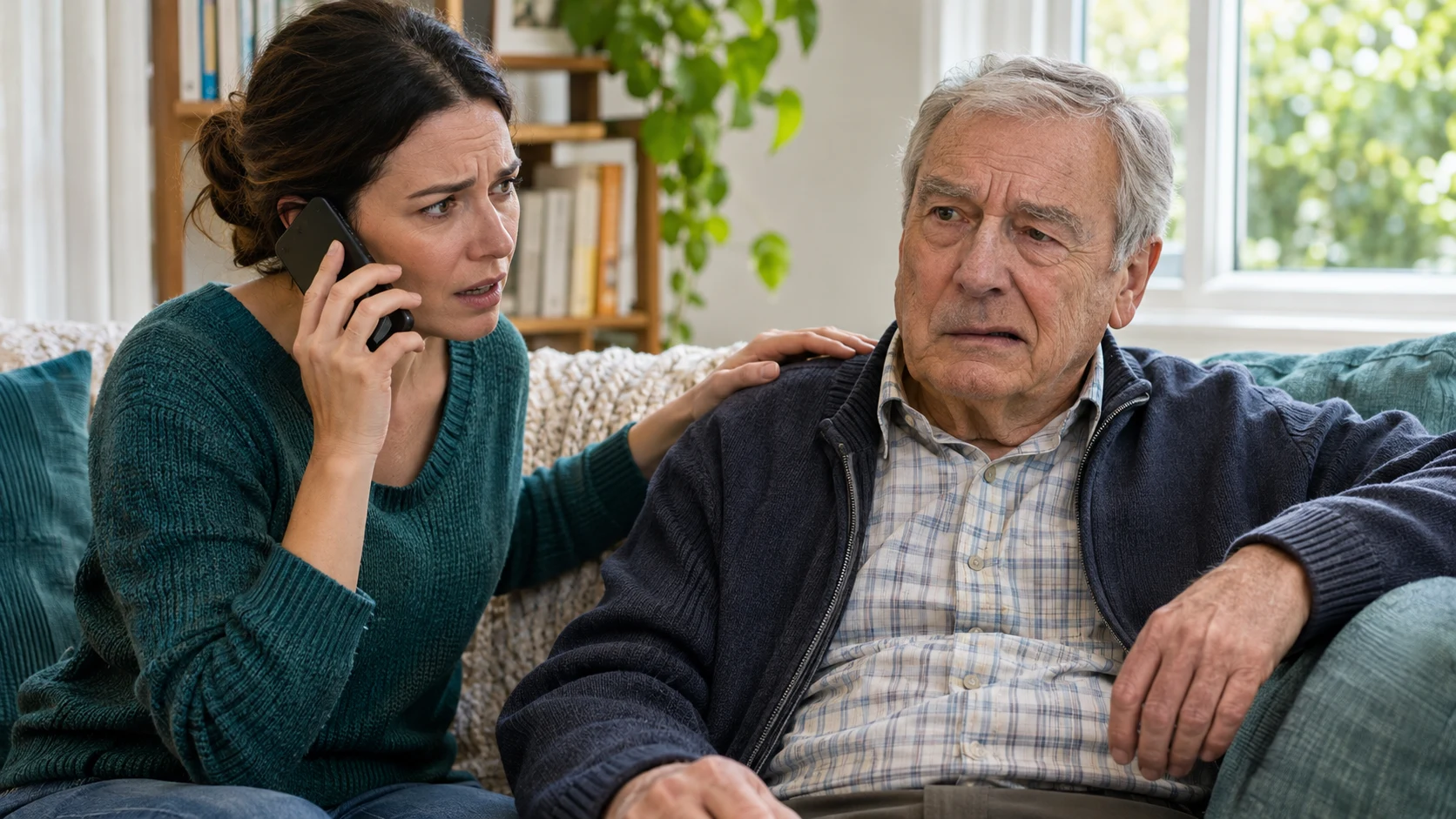
Sudden facial drooping, weakness, speech or vision changes, loss of balance, or a severe unexplained headache? Call 911 immediately—even if the symptoms disappear. Do not drive yourself or wait to finish reading.
A stroke can change an ordinary day in seconds. Someone may be talking with family one minute and suddenly be unable to speak clearly or move an arm the next. The symptoms are sudden, but risk factors such as high blood pressure, atherosclerosis, diabetes or an irregular heart rhythm may have been developing quietly for years.
Afterward, families often wonder whether an argument or a stressful day caused it. Emotional upset may sometimes be a trigger, but it does not explain the underlying cause on its own. Recognizing the warning signs and getting emergency help matters more than trying to work out the cause at home.
This guide draws on material from neurologist Dr. Kristaps Jurjāns, with additional research and editing by VitalMeGuide.
What Exactly Is a Stroke?
A stroke occurs when blood flow to part of the brain is interrupted or when bleeding occurs in or around the brain. The brain needs a continuous supply of oxygen and glucose carried by the blood. When blood flow is blocked or a blood vessel ruptures, brain cells can quickly become damaged.
In an ischemic stroke, some cells may die while nearby tissue may still be saved by restoring blood flow. A bleeding stroke needs a different approach to limit bleeding, pressure and further injury. This is why every minute matters during a stroke. There are two main types of stroke.
Ischemic Stroke
An ischemic stroke occurs when a blood clot blocks an artery supplying the brain. The clot may form inside an artery or travel from another part of the body, such as the heart. A thrombus is a blood clot that forms within the circulatory system. When a clot breaks loose and travels through the bloodstream before becoming lodged elsewhere, it is called an embolus.
Ischemic stroke is the most common type. In the United States, approximately 87% of strokes are ischemic.
Hemorrhagic Stroke
A hemorrhagic stroke occurs when a blood vessel ruptures, causing bleeding into or around the brain. The bleeding damages brain tissue and may increase pressure inside the skull. Hemorrhagic strokes can be particularly severe, although the outcome depends on the location and extent of bleeding, the person's overall health, and how quickly treatment begins.
Both types of stroke can cause similar symptoms. Without brain imaging, it is not possible to reliably determine whether a stroke was caused by a blocked blood vessel or bleeding.
How Common Is Stroke?
Stroke is one of the leading causes of death and long-term disability worldwide. Global estimates summarized by the World Health Organization and World Stroke Organization suggest a lifetime stroke risk of approximately one in four from age 25 onward. This is a population-level lifetime risk estimate, not a prediction for any particular individual.
Personal risk can vary considerably depending on age, genetics, blood pressure, heart health, smoking, physical activity, and other factors.
Stroke Statistics in the United States
The CDC's Stroke Facts page reports the following annual estimates. These are established estimates from earlier datasets, not counts of events in 2026:
- More than 795,000 people in the United States experience a stroke each year.
- Someone in the U.S. has a stroke approximately every 40 seconds.
- About 610,000 strokes each year are first-time events.
- Approximately 185,000 strokes occur in people who have previously had a stroke.
Is Stroke Becoming More Common Among Younger Adults?
For many years, stroke was considered primarily a disease of older adults. But it can also affect people in their 20s, 30s, and 40s. Dr. Jurjāns's source material highlights that stroke can occur even in children. Age alone should never be used to dismiss sudden neurological symptoms. Global research suggests that the burden of stroke has increased in some younger age groups and regions.
However, trends differ between countries and populations. One possible explanation is that cardiovascular risk factors are appearing earlier in life. Physical inactivity, obesity, high blood pressure, diabetes, and smoking can contribute to vascular damage long before retirement age. Younger adults may also experience strokes for other reasons, including certain blood-clotting disorders, blood vessel abnormalities, and structural heart conditions.
Being young does not rule out stroke.
What Causes a Stroke?
Several factors contribute to stroke risk. Some, such as age and family history, cannot be changed. But many others can be managed.
High Blood Pressure
High blood pressure is one of the most important risk factors for stroke. Over time, uncontrolled blood pressure damages blood vessel walls, promotes atherosclerosis, and increases the risk of both ischemic and hemorrhagic stroke. The dangerous part is that high blood pressure often causes no noticeable symptoms. Someone may work, exercise, travel, and feel perfectly healthy while damage gradually develops inside their arteries.
Extremely high blood pressure, particularly when accompanied by sudden neurological symptoms, can signal a medical emergency. However, a stroke can also occur without an exceptionally high blood pressure reading at the time. There is no single blood pressure number that can reliably predict whether a stroke will occur.
High Cholesterol and Atherosclerosis
Elevated levels of certain blood lipids, particularly LDL cholesterol, contribute to the formation of fatty plaques inside artery walls. These plaques can narrow blood vessels and promote blood clot formation. If a clot blocks an artery supplying the brain, an ischemic stroke may occur. Managing cholesterol is an important part of cardiovascular prevention.
Diabetes
Persistently elevated blood sugar can damage blood vessels over time. People with diabetes are also more likely to have additional stroke risk factors, including high blood pressure and abnormal cholesterol levels. Effective prevention therefore involves managing overall cardiovascular health, not just blood sugar.
Smoking
Tobacco smoke damages blood vessels, promotes inflammation, and increases the risk of blood clots. Quitting smoking is one of the most important steps a person can take to reduce cardiovascular risk.
Physical Inactivity and Excess Weight
Low physical activity and obesity are often associated with high blood pressure, diabetes, and other metabolic problems. Regular exercise can help improve several of these risk factors.
Atrial Fibrillation
One particularly important cause of ischemic stroke is atrial fibrillation, often abbreviated as AFib. This heart rhythm disorder can allow blood clots to form inside the heart. If a clot travels to the brain and blocks an artery, it can cause a stroke. AFib is associated with an approximately fivefold increase in stroke risk, although individual risk depends on age, other health conditions, and treatment.
Some people experience palpitations, an irregular heartbeat, or fatigue. Others have no obvious symptoms. In those cases, AFib may only be discovered during a routine medical examination.
Are Women or Men More Likely to Have a Stroke?
Men have higher stroke incidence in many age groups. However, women generally live longer, and a substantial proportion of stroke patients at older ages are women. After menopause, several factors affecting cardiovascular health change. A woman's overall cardiovascular risk may increase, although menopause is not the only reason. Women also have certain sex-specific stroke risk factors, including some pregnancy complications and preeclampsia.
Stroke risk should be assessed individually rather than based on sex alone. Age, blood pressure, medical history, and other health conditions all matter.
Can Emotional Stress Cause a Stroke?
Intense emotional stress can temporarily increase blood pressure and affect cardiovascular function. The observational INTERSTROKE study found an association between anger or emotional upset in the preceding hour and stroke onset. It cannot establish that stress caused a particular person’s stroke, and it is not a reason to blame the person or their family.
However, it would be inaccurate to say that a single argument or upsetting experience is usually the sole cause of stroke. More often, several underlying risk factors have been developing over time. When a stroke follows a stressful event, doctors still need to investigate the person's blood vessels, heart, and overall cardiovascular health.
How Can You Recognize a Stroke?
Stroke symptoms usually begin suddenly. Someone may feel completely normal one moment and then struggle to speak, walk, or move one side of the body. In the United States, the acronym B.E. F.A.S.T. is widely used to help people recognize the warning signs.
B — Balance
Sudden loss of balance or coordination, difficulty walking, or unexplained severe dizziness may be signs of stroke.
E — Eyes
A person may suddenly experience blurred vision, vision loss in one or both eyes, or double vision.
F — Face
Ask the person to smile. Does one side of the face droop? Is the smile noticeably uneven? Sudden facial weakness can be a sign of stroke.
A — Arms
Ask the person to raise both arms. Does one arm drift downward? Are they unable to lift or hold one arm? Sudden weakness may also affect a leg.
S — Speech
Speech may suddenly become slurred or difficult to understand. The person may struggle to find words or have trouble understanding what others are saying. Sometimes they cannot repeat a simple sentence.
T — Time to Call 911
If any of these symptoms appear suddenly, call 911 immediately. Do not wait to see whether the symptoms disappear. A stroke does not have to cause complete paralysis of an arm and leg at the same time. Sudden weakness in one arm, one-sided numbness, vision loss, or speech problems are all reasons to seek emergency help.
Another Warning Sign: A Sudden Severe Headache
A sudden, unusually severe headache with no clear cause can also signal a stroke, especially bleeding around the brain. It may occur with vomiting, neck stiffness or loss of consciousness, but do not wait for those symptoms. Call 911. B.E. F.A.S.T. is a memory aid, not a checklist that rules stroke out when some signs are absent.
What Should You Do if Someone May Be Having a Stroke?
The actions taken during the first few minutes can make a major difference. First, call 911 immediately. Do not wait for the person to feel better. Use an ambulance rather than driving yourself or having someone drive you. Paramedics can assess you, alert the receiving hospital and help get you to appropriate stroke care.
Second, note when the person was last known to be well. This information is essential when doctors determine which treatments may be appropriate. If the person wakes up with symptoms, try to establish when they were last known to be symptom-free, such as before going to sleep. Third, do not give food or drinks.
Stroke can interfere with swallowing and increase the risk of choking or aspiration. Do not give aspirin or other medications unless emergency professionals specifically instruct you to do so. Before brain imaging, it may be impossible to know whether bleeding is present. Fourth, help the person remain safe and comfortable.
If they are awake, minimize unnecessary movement and follow instructions from the emergency dispatcher. If they are unconscious but breathing, follow the dispatcher's guidance about safe positioning. If the person is not breathing normally, follow the dispatcher's instructions for CPR. If possible, gather information about medical conditions and current medications, especially blood thinners.
Why Is Waiting So Dangerous?
When a blood vessel supplying the brain becomes blocked, some nerve cells may die quickly. Others in the surrounding area may remain viable for a limited time. Restoring circulation can sometimes prevent additional damage. But the longer treatment is delayed, the greater the risk of permanent injury. Some people hope that weakness, numbness, or speech difficulties will improve after a little rest.
Even if symptoms disappear within minutes, emergency medical evaluation is still necessary.
What Is a Transient Ischemic Attack (TIA)?
A transient ischemic attack, or TIA, causes temporary stroke-like symptoms when blood supply to part of the nervous system is briefly reduced, without acute tissue death. Symptoms often last only minutes. If imaging shows a new infarction—an area of dead tissue—the event is a stroke even if the symptoms have resolved. You cannot reliably tell the difference at home.
TIA symptoms may be identical to those of a stroke. A person might suddenly develop facial drooping, arm weakness, speech problems, or vision loss. The symptoms may disappear after only a few minutes. However, this does not mean the danger has passed. A TIA is an important warning sign that a future stroke may occur, sometimes in the near term.
Call 911 even if stroke-like symptoms have completely resolved.
How Is Stroke Treated in the Hospital?
When someone arrives at the hospital with a suspected stroke, the first priority is identifying the type of stroke. Doctors usually perform an urgent CT scan of the brain. Additional tests may include CT angiography, MRI, or other imaging techniques. These examinations help determine whether bleeding has occurred, whether a large artery is blocked, and whether brain tissue may still be saved.
Treatment decisions depend on these findings.
Thrombolysis: Medication That Helps Dissolve a Clot
For eligible patients with ischemic stroke, doctors may administer an intravenous thrombolytic medication. These medications help break down the blood clot responsible for blocking an artery. According to the 2026 U.S. stroke guidelines, eligible patients can generally receive intravenous thrombolysis within 4.5 hours of symptom onset or the last known well time.
Medications used may include alteplase or tenecteplase. For some people who wake with symptoms or arrive after the standard window, advanced imaging may identify tissue that can still be saved. The stroke team decides whether later treatment is appropriate; do not assume you are too late to seek help. However, this option is not appropriate for everyone.
Thrombolysis carries a risk of serious bleeding, so doctors must carefully assess potential benefits and contraindications.
Mechanical Thrombectomy: Removing the Clot
When a stroke is caused by a blockage in a large brain artery, some patients may benefit from mechanical thrombectomy. During this minimally invasive procedure, a specialist guides a catheter through blood vessels to the blocked artery. A specialized device is then used to retrieve the clot and restore blood flow.
Under the 2026 U.S. guidelines, certain patients may benefit from the procedure as late as 24 hours after symptom onset or the last known well time. However, eligibility depends on the location of the blockage, brain imaging findings, and the patient's overall condition. The 24-hour window should never be interpreted as permission to delay seeking care.
Earlier treatment is generally associated with better outcomes.
How Is a Hemorrhagic Stroke Treated?
Treatment for a hemorrhagic stroke differs significantly from treatment for an ischemic stroke. When bleeding has occurred in the brain, clot-dissolving medications are not used. Instead, treatment focuses on stabilizing the patient, controlling bleeding, and limiting further brain injury. Doctors carefully manage blood pressure and other vital functions. If the person has been taking anticoagulant medications, urgent reversal of their effects may be necessary in certain situations.
Some patients require neurosurgical procedures. The prognosis depends on the size and location of the hemorrhage, the patient's age, and other medical factors.
Why Do Some People Die After a Stroke?
Stroke can damage areas of the brain responsible for movement, speech, consciousness, and vital bodily functions. If the injury is extensive or affects particularly important brain structures, the patient's condition may become critical. However, complications after stroke can also be dangerous. Some patients develop swallowing difficulties, increasing the risk of aspiration pneumonia.
Others may develop infections, blood clots in the legs, pressure injuries, or other complications related to reduced mobility. This is why stroke care does not end after restoring blood flow or stabilizing the initial emergency. High-quality nursing care and appropriately timed rehabilitation are also essential.
Can People Recover Movement and Speech After a Stroke?
Some patients recover with few or no lasting symptoms. Others experience persistent difficulties with movement, speech, vision, memory, or other neurological functions. Recovery varies considerably. The brain has an ability to adapt and reorganize its neural connections. This is known as neuroplasticity. After a stroke, surviving neural networks may partially reorganize and compensate for damaged areas.
This helps explain why rehabilitation can improve the ability to walk, use an arm, or communicate. However, the extent of recovery depends on the location and severity of brain injury.
Why Are the First Few Months So Important?
The fastest improvements often occur in the first weeks and months, particularly the first three months. Recovery is not limited to that period. But progress does not necessarily stop after that period. Recovery can continue for months or years. Some patients need prolonged physical therapy, occupational therapy, or speech-language therapy.
Assessment of emotional health, memory, attention, and other cognitive functions may also be necessary. Rehabilitation is not a short course of treatment after which everything automatically returns to normal. It is a gradual process requiring consistent effort and an individualized plan.
What Is Life Like After a Stroke?
Life after a stroke can look very different from one person to another. Some return to work and their previous routines. Others require mobility aids, ongoing rehabilitation, or assistance from family members. Even when movement has largely recovered, people may experience less visible symptoms such as fatigue, concentration problems, mood changes, or depression.
Recovery should therefore be evaluated more broadly than simply whether someone can move an arm or walk independently. Dr. Jurjāns's source material emphasizes helping people return to meaningful activities when this is safe. Walking, gardening, and other appropriate physical activities may become valuable parts of recovery. Exercise and activities should be adapted to the person's abilities and medical condition with the rehabilitation team. Recovery is not a test of willpower: stroke severity, fatigue, other illnesses and access to therapy all affect progress.
Some people need additional help with balance, coordination, or endurance. Returning to driving also requires individual assessment, especially when vision, reaction time, or thinking has been affected. In the United States, relevant state requirements must also be considered.
How Can You Prevent Another Stroke?
For someone who has already experienced a stroke, preventing another event is one of the most important long-term priorities. This includes regular medical follow-up, managing blood pressure, monitoring cholesterol and blood sugar, and taking prescribed medications. Treatment depends on the type and cause of the previous stroke. Some patients are prescribed antiplatelet medications, such as aspirin or clopidogrel.
Others, including certain patients with atrial fibrillation, may require anticoagulants. These medication groups are not interchangeable.
Why Can't Aspirin Replace an Anticoagulant for AFib?
Atrial fibrillation can allow blood clots to form inside the heart. For patients whose stroke risk is sufficiently elevated, doctors often recommend anticoagulant treatment. Examples include apixaban, rivaroxaban, dabigatran, and warfarin. The choice depends on medical history, kidney function, other medicines and bleeding risk. Do not start, stop or combine a blood thinner and aspirin without your prescriber's guidance.
Aspirin is not an equivalent substitute for anticoagulation when anticoagulant treatment is indicated for stroke prevention in atrial fibrillation. Stopping an anticoagulant and replacing it with aspirin without medical guidance can substantially increase stroke risk. At the same time, anticoagulants increase bleeding risk and require individualized medical assessment.
Three Common Mistakes That Increase the Risk of Another Stroke
1. Stopping Medication Because You Feel Better
A person may assume that medication is no longer necessary because their blood pressure or other measurements have improved. But feeling well may be the result of effective treatment. Stopping medication can allow risk factors to worsen again.
2. Changing Medication Without Medical Advice
Switching medication types or changing doses without professional guidance can be particularly dangerous with anticoagulants and other drugs affecting blood clotting.
3. Ignoring Routine Health Monitoring
High blood pressure and elevated cholesterol often cause no noticeable symptoms. People may feel healthy while their cardiovascular risk remains elevated. Regular checkups and appropriate treatment can help prevent complications.
Can Stroke Be Prevented?
Not every stroke can be prevented. Genetics, certain anatomical conditions, and other factors beyond personal control also contribute to risk. However, many major stroke risk factors are modifiable. For most people, prevention focuses on managing blood pressure, avoiding tobacco, staying physically active, eating a balanced diet, and properly treating existing medical conditions.
Detecting atrial fibrillation and determining whether anticoagulation is necessary are especially important. Do not start daily aspirin on your own to prevent a first stroke: its bleeding risks mean it is not suitable for everyone. A primary care doctor can help you make a prevention plan based on your individual risk.
High blood pressure, diabetes, and obesity can develop much earlier. People with elevated risk may benefit from regular medical evaluation and individualized prevention plans.
Based on material by neurologist Dr. Kristaps Jurjāns, adapted for US readers with additional research and editing by VitalMeGuide. This adaptation has not been independently medically reviewed. The AI-generated illustration depicts fictional people. This article provides general information, not individual medical advice. Suspect a stroke? Call 911 immediately.
Read the sources
- World Health Organization (WHO). Stroke. Information on global stroke burden, risk factors, prevention, and treatment.
- Centers for Disease Control and Prevention (CDC). Stroke Facts. U.S. stroke statistics and major risk factors.
- CDC. Signs and Symptoms of Stroke. Stroke warning signs and emergency response.
- American Heart Association / American Stroke Association. 2026 Guideline for the Early Management of Patients With Acute Ischemic Stroke.
- American Heart Association / American Stroke Association. 2024 Guideline for the Primary Prevention of Stroke.
- American Heart Association / American Stroke Association. 2022 Guideline for the Management of Patients With Spontaneous Intracerebral Hemorrhage.
- World Stroke Organization. Global Stroke Fact Sheet 2025. International Journal of Stroke.
- American Stroke Association. Transient Ischemic Attack (TIA).
- American Stroke Association. Stroke Rehabilitation.
- American College of Cardiology / American Heart Association. 2023 Guideline for the Diagnosis and Management of Atrial Fibrillation.
- Smyth A, et al. Anger or emotional upset and heavy physical exertion as triggers of stroke: the INTERSTROKE study. European Heart Journal. 2022;43:202–209.
- American Stroke Association. Stroke Explained: Symptoms, Causes, Treatment and Recovery Guide.
This article explains selected evidence. It is not a systematic review or individual medical advice.