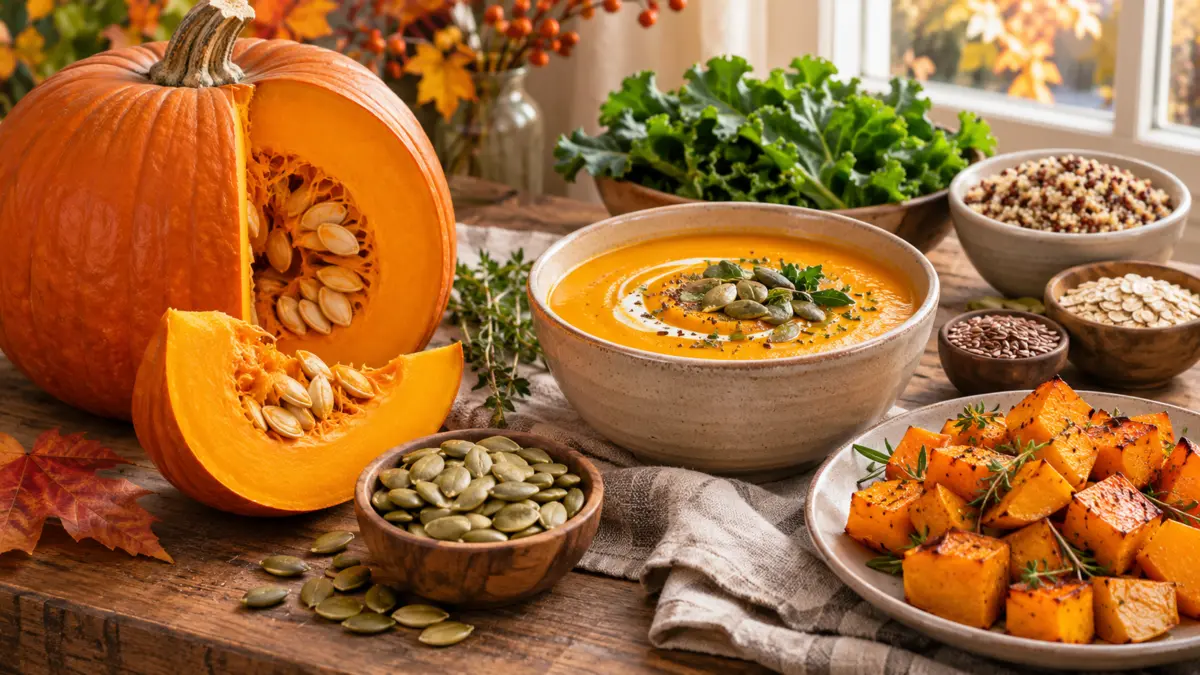
When fall arrives, pumpkins seem to be everywhere. We roast them, blend them into soups, add them to stews, stir them into oatmeal, and turn them into pies and other seasonal treats.
But pumpkin is much more than a symbol of autumn. Beneath its bright orange skin is a nutritious vegetable packed with beneficial plant compounds, vitamins, minerals, and water.
And one of the best things about pumpkin is its versatility. Both the flesh and seeds can be part of a healthy diet, offering different nutritional benefits.
So, what exactly makes pumpkin good for you? And how can you enjoy it without turning every pumpkin dish into a sugary dessert?
1. Pumpkin Can Support Healthy Digestion
One of pumpkin's nutritional benefits is its fiber content.
Fiber plays an important role in keeping the digestive system working properly. It helps support regular bowel movements, contributes to stool consistency, and provides nourishment for certain beneficial bacteria in the gut.
Including pumpkin in your meals can be one way to increase your intake of plant foods, especially if you don't eat enough vegetables.
However, pumpkin isn't as high in fiber as some people might expect.
According to USDA food composition data, 100 grams (about 3.5 ounces) of boiled pumpkin contains approximately 1.1 grams of fiber. That's helpful, but it's considerably less than you would get from many beans, lentils, or whole grains.
For better digestive health, pumpkin works particularly well alongside other fiber-rich foods.
For example, adding lentils to pumpkin soup or serving roasted pumpkin with beans and whole grains creates a more fiber-rich meal.
What About the Pumpkin Skin?
Researchers have also explored polysaccharides and other plant compounds found in pumpkin peels, including their potential effects on gut microorganisms.
These early findings are interesting, but they don't establish that eating pumpkin skin improves the human gut microbiome.
Some pumpkin varieties have thin, edible skin that softens during cooking. Others have tougher skins that are better removed.
If you plan to eat the skin, wash the pumpkin thoroughly and make sure the variety is suitable for eating that way.
One more thing: If you're not used to eating much fiber, increase your intake gradually. Suddenly adding large amounts of fiber to your diet can lead to bloating, gas, or abdominal discomfort.
2. Pumpkin Provides Valuable Antioxidants
Have you ever wondered why pumpkin has such a beautiful orange color?
Much of that color comes from carotenoids, a group of naturally occurring pigments found in plants.
One of the best-known carotenoids is beta-carotene.
Beta-carotene is particularly important because the body can convert it into vitamin A when needed.
Carotenoids can also act as antioxidants, helping the body manage oxidative processes involving free radicals.
Oxidative stress has been studied in connection with aging and several chronic diseases. However, this doesn't mean that eating a food rich in antioxidants can automatically prevent these conditions.
Scientists have investigated compounds from pumpkin flesh, seeds, and peel for their possible biological effects, including in laboratory studies involving cancer cells.
While some findings are promising, laboratory research is not proof that eating pumpkin prevents or treats cancer in humans.
The broader message is more useful: Eating a variety of colorful vegetables and fruits helps provide different antioxidants and other nutrients.
Pumpkin is one excellent addition to that variety.
3. Can Pumpkin Help Your Immune System?
Pumpkin contains nutrients that contribute to normal immune function, especially beta-carotene, which the body can convert into vitamin A.
Vitamin A helps maintain the health of the skin and mucous membranes. It also plays an important role in the normal functioning of the immune system.
Pumpkin contains some vitamin C, too, although the amount varies depending on the variety and how it is prepared.
Vitamin C supports immune function and helps protect cells from oxidative stress.
Pumpkin seeds offer a somewhat different nutritional profile. They contain zinc, a mineral involved in many immune processes.
It's worth distinguishing between the two: Pumpkin flesh is particularly valuable for its carotenoids, while pumpkin seeds are a more concentrated source of minerals such as zinc and magnesium.
Still, eating pumpkin soup won't suddenly make you immune to colds or seasonal viruses.
Your immune system depends on many things, including adequate nutrition, sleep, physical activity, age, and overall health.
Pumpkin simply helps contribute to a balanced eating pattern that provides the body with the nutrients it needs.
4. Pumpkin Can Make Meals More Filling Without Adding Many Calories
Pumpkin contains a lot of water and relatively few calories.
For example, 100 grams of boiled pumpkin without added salt contains approximately 20 calories, according to USDA food composition data.
The exact amount varies with the variety and cooking method.
This makes pumpkin useful when you want to prepare a satisfying meal without relying on large amounts of calorie-dense ingredients.
Roasted pumpkin can add volume to a vegetable bowl, while pumpkin puree can give soups a naturally creamy texture.
Pumpkin also provides some fiber, which can contribute to fullness as part of a balanced meal.
However, because pumpkin is relatively low in protein and fat, it may not keep you satisfied for very long when eaten alone.
That's why combining it with protein and healthy fats often makes sense.
For example, you could serve roasted pumpkin with salmon, chickpeas, or grilled chicken. Or make pumpkin soup with lentils and finish it with a spoonful of pumpkin seeds.
These combinations provide a broader range of nutrients and may help you feel satisfied for longer.
Preparation Matters
Pumpkin itself is relatively low in calories. But the nutritional profile of a pumpkin dish can change dramatically depending on what you add.
A homemade roasted pumpkin dish with herbs and olive oil is very different from pumpkin pie loaded with added sugar and butter.
That doesn't mean you can never enjoy pumpkin desserts.
It simply means that pumpkin's natural nutritional benefits shouldn't be confused with the healthfulness of every food made with pumpkin.
For everyday meals, simple preparations are often the best starting point.
5. Pumpkin Contains Nutrients Important for Eye Health
Pumpkin is especially interesting when it comes to eye health.
Its beta-carotene content makes it a useful dietary source of vitamin A.
Vitamin A is essential for normal vision, particularly for seeing in low-light conditions.
A severe deficiency can cause vision problems, including night blindness.
Pumpkin also contains the carotenoids lutein and zeaxanthin, although the amount varies by variety and preparation.
These compounds are found in the retina, especially in the macula, which is responsible for sharp central vision.
Researchers have studied lutein and zeaxanthin in relation to age-related macular degeneration (AMD), a condition that can affect central vision as people get older.
Some people with specific stages of AMD benefit from specially formulated AREDS2 supplements containing lutein and zeaxanthin.
But that doesn't mean eating pumpkin provides the same effect as those supplements.
There is no good evidence that pumpkin alone prevents cataracts, glaucoma, or age-related macular degeneration.
And eating extra beta-carotene won't necessarily improve vision if your vitamin A status is already adequate.
Nevertheless, pumpkin is a practical way to include carotenoid-containing vegetables in your diet.
One useful cooking tip: Carotenoids are fat-soluble compounds, so eating pumpkin with a little healthy fat, such as olive oil, can help improve their absorption.
6. Pumpkin Can Fit Into a Heart-Healthy Diet
Pumpkin provides potassium, a mineral involved in muscle contraction, nerve signaling, and blood pressure regulation.
It is also naturally very low in sodium when prepared without added salt.
That makes pumpkin a convenient ingredient for people trying to include more vegetables while limiting sodium intake.
For example, roasted pumpkin seasoned with garlic, pepper, and herbs can provide plenty of flavor without requiring much salt.
Pumpkin also contains small amounts of magnesium and calcium, although the flesh isn't a particularly rich source of either mineral.
Of course, one serving of pumpkin won't dramatically lower blood pressure or protect you from heart disease.
What matters most is your overall diet.
Eating patterns that include plenty of vegetables, fruits, whole grains, legumes, and suitable sources of healthy fats are associated with better cardiovascular health.
Pumpkin can be one of many vegetables contributing to that pattern.
People with certain kidney conditions or high blood potassium levels may need individualized advice about potassium-rich foods.
7. Don't Forget the Pumpkin Seeds
When preparing pumpkin, many people throw away the seeds.
That's a shame, because pumpkin seeds are nutritious in their own right.
Unlike the watery, low-calorie flesh, pumpkin seeds are a concentrated source of energy and nutrients.
They provide plant protein, unsaturated fats, magnesium, zinc, phosphorus, and other minerals.
They're also easy to add to everyday meals.
Try sprinkling pumpkin seeds over a salad, adding them to oatmeal or yogurt, or using them as a crunchy topping for pumpkin soup.
A small handful can add flavor, texture, and useful nutrients.
However, because seeds contain considerably more calories than pumpkin flesh, portion size matters, especially if you're managing your calorie intake.
Unsalted or lightly roasted seeds are usually a good choice.
8. Can You Eat Pumpkin Skin?
The answer depends on the variety.
Some pumpkins and winter squashes have thin skins that become tender when cooked.
For example, Hokkaido squash, also known as red kuri squash, is often prepared with the skin left on.
Other varieties have thick, tough skins that are generally removed before eating.
Pumpkin skin contains plant compounds and fiber, but there's no need to force yourself to eat it to receive the vegetable's nutritional benefits.
The flesh is nutritious on its own.
If you do use the skin, wash the pumpkin carefully before cooking.
9. Easy Ways to Add More Pumpkin to Your Diet
One of pumpkin's greatest strengths is how easily it fits into different meals.
You don't need complicated recipes or special ingredients to enjoy it.
Roast It
Cut pumpkin into cubes, toss with a little olive oil, and season with herbs, garlic, or black pepper.
Roast until tender and lightly caramelized.
Serve it alongside fish, chicken, lentils, or other vegetables.
Make a Hearty Soup
Pumpkin makes a wonderful base for soup.
Combine it with onions, carrots, ginger, lentils, or beans.
Blending the vegetables creates a naturally smooth texture without requiring large amounts of cream.
Stir It Into Oatmeal
A few spoonfuls of plain pumpkin puree can add flavor and color to warm oatmeal.
Try adding cinnamon and a handful of nuts or seeds.
Add It to Grain Bowls
Roasted pumpkin works well with brown rice, quinoa, chickpeas, leafy greens, and a simple olive oil dressing.
Use It in Baking
Pumpkin puree can be used in muffins, pancakes, and other baked foods.
For everyday cooking, choose plain pumpkin puree rather than sweetened pumpkin pie filling.
Save Some for Later
Cooked pumpkin puree can be frozen in small portions and used in soups, sauces, oatmeal, and other dishes.
This is especially helpful when you have a large pumpkin and don't want any of it to go to waste.
10. Is It Healthy to Eat Pumpkin Every Day?
For most healthy people, pumpkin can be eaten regularly, even every day, as part of a varied diet.
There's no special amount you need to consume to experience its nutritional benefits.
The main goal is simply to include a wide variety of vegetables and other nutritious foods in your meals.
It's easy to become interested in a particular food after hearing about its vitamins or antioxidants.
But health doesn't depend on eating one supposedly perfect vegetable.
A varied diet matters much more than any single ingredient.
Different vegetables provide different combinations of vitamins, minerals, fiber, and plant compounds.
So enjoy your pumpkin, but make room for leafy greens, carrots, broccoli, tomatoes, beans, and other plant foods, too.
Why Pumpkin Is Worth Enjoying This Fall
Fall is the perfect time to take advantage of pumpkin season.
Pumpkin is versatile, relatively low in calories, and provides valuable nutrients, particularly carotenoids that the body can use to make vitamin A.
Its seeds add protein, healthy fats, and minerals, while the flesh works beautifully in everything from soups to roasted vegetable dishes.
Still, pumpkin isn't a miracle food.
It won't cure illnesses, guarantee stronger immunity, or prevent every age-related health problem.
Its real value is much simpler.
Pumpkin makes it easier to enjoy more vegetables, prepare satisfying meals, and bring a little more variety and nutrition to your everyday diet.
And sometimes, those small choices are exactly what healthy eating is all about.
Read the sources
- U.S. Department of Agriculture. FoodData Central: Pumpkin, Cooked, Boiled, Drained, Without Salt.
- National Institutes of Health, Office of Dietary Supplements. Vitamin A and Carotenoids — Health Professional Fact Sheet.
- National Institutes of Health, Office of Dietary Supplements. Vitamin C — Health Professional Fact Sheet.
- National Institutes of Health, Office of Dietary Supplements. Potassium — Health Professional Fact Sheet.
- National Institutes of Health, Office of Dietary Supplements. Zinc — Health Professional Fact Sheet.
- National Eye Institute. AREDS 2 Supplements for Age-Related Macular Degeneration.
- National Institute of Diabetes and Digestive and Kidney Diseases. Eating, Diet, & Nutrition for Constipation.
- World Health Organization. Healthy Diet.
- University of Rochester Medical Center. Nutrition Facts: Pumpkin, cooked, boiled, drained, without salt, 1 cup, mashed.
- Gual-Grau A, et al. In vitro fermentability of a broad range of natural ingredients by fecal microbiota from lean and obese individuals: potential health benefits. International Journal of Food Sciences and Nutrition (2022). Laboratory fermentation study, not a clinical trial.
- Antioxidant, antibacterial and antiproliferative activities of pumpkin (cucurbit) peel and puree extracts — an in vitro study. Laboratory findings do not demonstrate cancer prevention or treatment in people.
- University of Maine Cooperative Extension. Vegetables and Fruits for Health: Winter Squash and Pumpkins.
This article explains selected evidence. It is not a systematic review or individual medical advice.