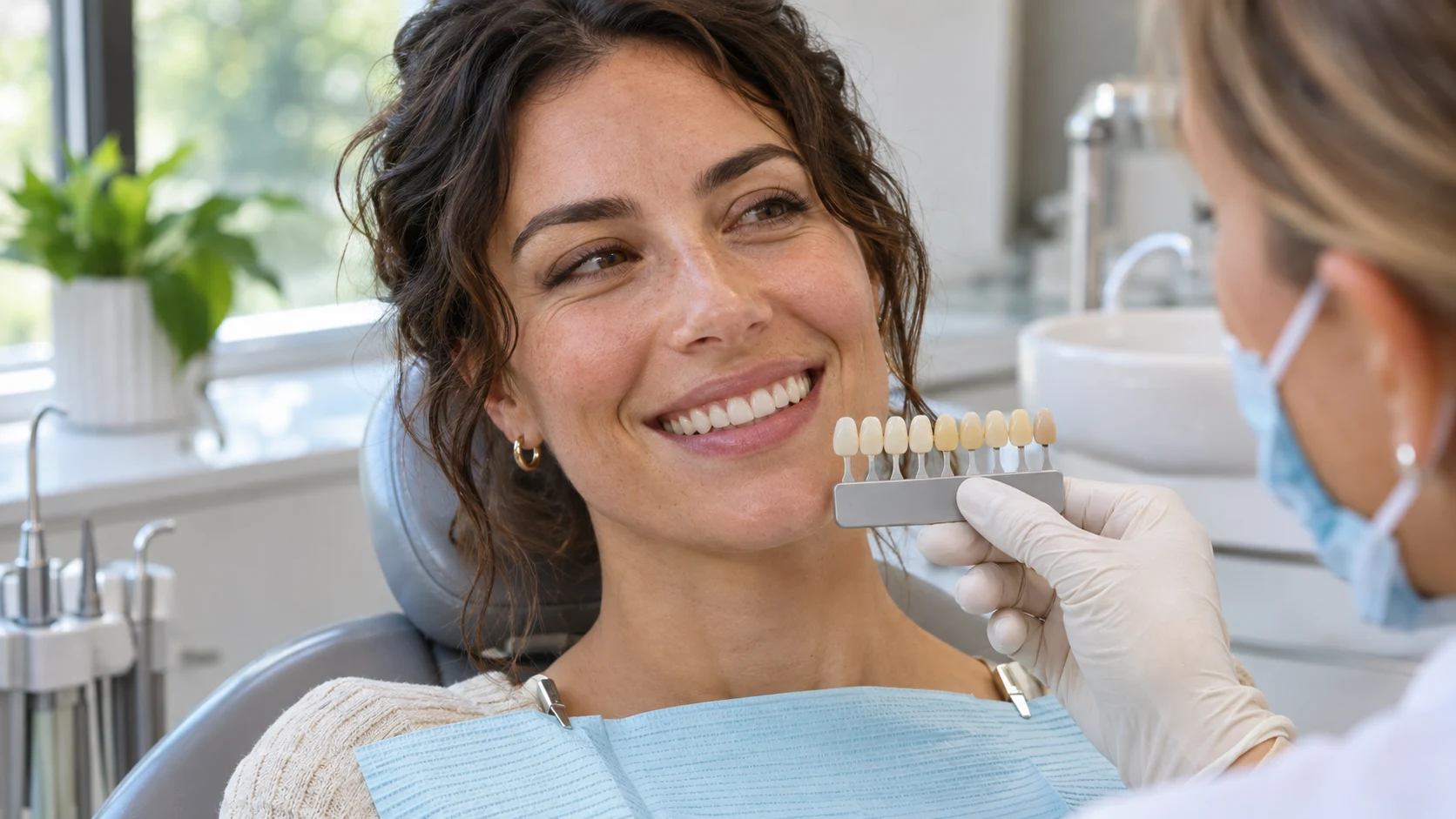
Your teeth looked brighter after whitening. A few months later, you notice a hint of yellow again. Did the treatment wear off, or is it time for a cleaning? The answer depends on where the color comes from. A coffee stain on the surface of a front tooth is a different problem from one tooth turning gray after an injury.
Would a cleaning be enough?
Think about how your teeth look just after a visit to the hygienist. Removing tartar and polishing away stains from coffee, black tea or tobacco can brighten a smile in one appointment. If the shade you like is the one you see after a cleaning, you may already have your answer.
Natural tooth color comes partly from dentin, the yellowish tissue beneath translucent enamel. As enamel wears and dentin changes with age, that warm shade can become more noticeable. Two people who take equally good care of their teeth can have quite different smiles. A whitening toothpaste can help lift surface stains. To lighten the color within a natural tooth, you need a bleaching agent.
Why is one tooth a different color?
If a single tooth turns darker than its neighbors, particularly after a fall or a blow, have a dentist examine it before using a whitening kit. An old injury can affect the tissue inside the tooth even if it doesn’t hurt. A tooth that has already had root canal treatment can sometimes be bleached from the inside by a dentist.
Other patterns have different explanations. Certain tetracycline antibiotics taken while teeth were developing can leave bands of color that are difficult to lighten evenly. A prescribed chlorhexidine rinse can leave brown surface stains that a hygienist can often remove. If the timing points to a medicine or mouthwash, bring its name to your appointment. Ask about the staining before changing how you use it.
How do strips, custom trays and in-office whitening compare?
Most bleaching treatments use hydrogen peroxide or carbamide peroxide, which releases hydrogen peroxide. It breaks down colored compounds within the tooth. The choices differ in how the gel reaches the teeth, how long you wear it and who supervises treatment.
- Over-the-counter strips are a relatively inexpensive option for gradual whitening at home. Follow the wear time and number of applications on the package. In the US, the ADA Seal of Acceptance can help you identify products that have been evaluated for safety and effectiveness when used as directed.
- Dentist-supervised trays are fitted to your teeth. Your dental team can show you how much gel to use, check the fit if it leaks onto your gums and adjust the schedule if cold drinks start to sting.
- In-office whitening is useful when you want a faster change or prefer the dentist to apply the gel. The dental team protects your gums during treatment. If a package includes a light or laser, ask what difference it is expected to make with that particular gel.
Before choosing, point out any tooth-colored fillings, crowns or veneers that show when you smile. They keep their existing shade while the natural teeth around them lighten. A front-tooth filling that blends in today could become more visible afterward. Ask to see the likely shade difference before you spend money on treatment.
What if you already have sensitive teeth?
Tell your dentist if one spot hurts when you bite or if cold water already makes your teeth ache. Cavities, cracks, exposed roots and inflamed gums can affect whether whitening is comfortable and what needs attention first. If you’re pregnant or breastfeeding, discuss postponing this elective treatment. Ask a dentist before using an adult whitening product on a child or teenager.
Temporary tooth sensitivity and irritated gums are the most common side effects. If your teeth start to hurt or the gel makes your gums sore, pause treatment. Your dentist can check the tray or suggest a gentler schedule. Pain that persists after you stop, or keeps returning in one tooth, deserves an examination. Wearing strips longer or combining several products increases exposure without guaranteeing a better shade.
What about charcoal, baking soda and lemon juice?
A baking-soda fluoride toothpaste is formulated for brushing. A homemade paste of baking soda and lemon juice exposes enamel to acid, and scrubbing can add wear. Skip the lemon. Evidence for charcoal whitening is limited, and some charcoal powders are abrasive. Neither is a good way to lighten the dentin beneath the enamel.
How can you keep the result?
Whitening fades at different rates. If tea or coffee is part of your day, rinsing with water afterward is a simple habit. You can keep berries on the menu. Brush twice daily with fluoride toothpaste, clean between your teeth each day and ask your hygienist whether surface stains have returned before starting another round of bleaching.
If a tooth still stands out after cleaning or whitening, ask what improvement is realistic. Bonding or veneers may be options for particular teeth, but veneers and crowns can involve removing healthy tooth structure. A useful question to take to your appointment is, “Which change could I expect from a cleaning alone, and what would bleaching add?”
Read the sources
- American Dental Association (ADA). Whitening. Evidence on professional and at-home whitening methods, mechanisms, side effects, and safety.
- National Health Service (NHS). Teeth Whitening. Guidance on safety, suitability, and expected results.
- European Parliament and Council. Regulation (EC) No 1223/2009 on Cosmetic Products. European requirements concerning peroxide-containing cosmetic whitening products.
- European Chemicals Agency (ECHA). Hydrogen Peroxide — Cosmetic Products Restrictions. Information on regulated cosmetic uses and restrictions.
- Australian Government, Healthdirect. Teeth Whitening. Information about whitening methods, risks, and possible complications.
- Carey, C. M. (2014). Tooth Whitening: What We Now Know. Journal of Evidence-Based Dental Practice, 14(Suppl.), 70–76.
- Kwon, S. R., & Wertz, P. W. (2015). Review of the Mechanism of Tooth Whitening. Journal of Esthetic and Restorative Dentistry, 27(5), 240–257.
- Brooks, J. K., Bashirelahi, N., & Reynolds, M. A. (2017). Charcoal and Charcoal-Based Dentifrices: A Literature Review. Journal of the American Dental Association, 148(9), 661–670.
- American Dental Association (ADA). Dental Erosion. Evidence about acid-related tooth wear and preventive dental care.
This article explains selected evidence. It is not a systematic review or individual medical advice.