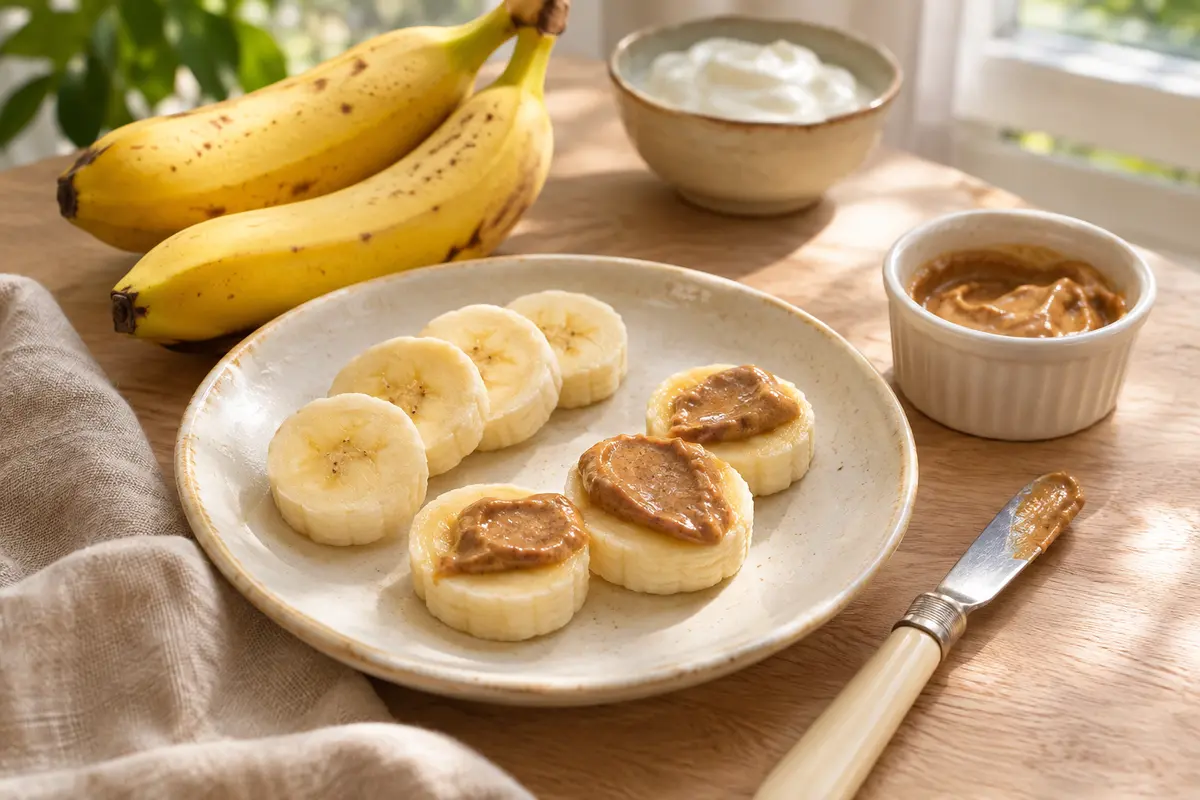
Bananas are one of the easiest fruits to enjoy. They're naturally sweet, affordable, available year-round, and come in their own convenient packaging. You can grab one on your way out the door, slice it into oatmeal, or enjoy it with a spoonful of almond butter.
Yet bananas have a surprisingly mixed reputation.
Some people eat them every day without a second thought. Others avoid them because they've heard bananas contain too much sugar, cause weight gain, or aren't suitable for people watching their blood sugar.
And then there's another question: If bananas are healthy, why not eat three, four, or even five a day?
The answer is more interesting than simply labeling bananas good or bad.
Bananas provide useful nutrients, but the amount you eat, your overall diet, and what you pair them with can all make a difference.
What's Actually in a Banana?
Bananas are made up mostly of water and carbohydrates. They also contain fiber, vitamins, and minerals, with very little fat or protein.
Food composition data show that one medium banana, weighing approximately 118 grams (about 4 ounces of edible fruit), provides:
| Nutrient | Amount per medium banana |
|---|---|
| Calories | 105 |
| Total carbohydrates | 27 g |
| Natural sugars | 14.4 g |
| Dietary fiber | 3.1 g |
| Protein | 1.3 g |
| Fat | 0.4 g |
| Potassium | 422 mg |
| Magnesium | 32 mg |
| Vitamin B6 | 0.43 mg |
| Vitamin C | 10.3 mg |
| Folate | 24 mcg |
These amounts are approximate. The nutritional content varies with banana size, variety, and ripeness.
Bananas don't provide large amounts of every vitamin, but they are a useful source of vitamin B6, potassium, and several other nutrients.
Why Is Vitamin B6 Important?
Vitamin B6 plays a role in many processes throughout the body.
It supports normal nervous system function, protein metabolism, and the production of neurotransmitters involved in brain function.
A medium banana provides roughly one-quarter to one-third of the recommended daily vitamin B6 intake for most nonpregnant adults, depending on age and sex.
What Does Potassium Do?
Potassium is essential for normal muscle contraction, nerve signaling, fluid balance, and blood pressure regulation.
Bananas are a convenient source, but they're far from the only one.
Potatoes, beans, lentils, spinach, avocados, and dairy products can also provide substantial amounts of potassium.
You don't need to eat several bananas every day to meet your potassium needs.
Do Bananas Contain Too Much Sugar?
This is probably one of the biggest reasons people hesitate to eat bananas.
A medium banana contains approximately 14 grams of naturally occurring sugar.
That's enough to make it taste sweet, especially when fully ripe.
But it's important to understand the difference between the sugar naturally present in whole fruit and the added sugar found in soda, candy, and many processed desserts.
When you eat a banana, you're also getting fiber, water, vitamins, and minerals.
A sugary beverage, by comparison, may provide a substantial amount of added sugar without the fiber found in whole fruit.
That doesn't mean banana sugars have no effect on blood glucose. They do.
However, judging an entire fruit only by its sugar content overlooks its broader nutritional value.
For most people, whole bananas can be part of a healthy eating pattern.
Do Bananas Cause Weight Gain?
Eating a banana doesn't automatically cause weight gain.
Over time, changes in body weight are influenced by overall calorie intake, energy expenditure, and other individual factors.
One medium banana provides about 105 calories.
That's less than many cookies, candy bars, pastries, and other sweet snacks.
If you replace a more calorie-dense snack with a banana, it may actually help you manage your total calorie intake.
But portions still matter.
Four medium bananas provide approximately 420 calories and more than 100 grams of carbohydrates.
That amount is not automatically harmful for a healthy person, but regularly eating several bananas in addition to your usual meals can increase your daily calorie intake.
And if bananas begin replacing other fruits and nutritious foods, your diet may become less varied.
The most useful question isn't whether bananas make you gain weight.
It's whether the amount you're eating fits your overall nutritional needs.
How Many Bananas Can You Eat a Day?
There is no universal scientific rule limiting everyone to a specific number of bananas per day.
Your needs depend on your age, physical activity, health, calorie requirements, and the rest of your diet.
For most healthy adults, one medium banana a day is a perfectly reasonable choice.
Two bananas can also fit comfortably into a balanced eating pattern, particularly for people with greater energy needs or active lifestyles.
Eating more occasionally isn't necessarily a problem.
However, there's no special benefit to eating four or five bananas every day simply because they're nutritious.
Variety matters.
An apple, orange, kiwi, a serving of berries, or another fruit may provide different combinations of vitamins, fiber, and beneficial plant compounds.
Instead of trying to find the perfect daily banana limit, aim to enjoy different fruits throughout the week.
Banana With Almond Butter: A Surprisingly Good Combination
One of the simplest ways to turn a banana into a more satisfying snack is to pair it with almond butter.
And there's a nutritional reason this combination works well.
The banana provides carbohydrates, potassium, vitamin B6, and fiber.
Almond butter adds unsaturated fats, vitamin E, magnesium, and some protein.
One tablespoon of almond butter typically contains about 100 calories, around 9 grams of fat, and roughly 2–4 grams of protein, depending on the product. Check the label for the serving you use.
Together, a medium banana and one tablespoon of almond butter provide roughly 200 calories.
That's a practical afternoon snack or a quick option when you're hungry between meals.
The fat and protein in almond butter may help slow digestion and increase fullness compared with eating a banana alone.
However, almond butter is calorie-dense, so more isn't automatically better.
For a simple snack, one tablespoon is often enough.
Choose an almond butter with a short ingredient list, ideally made from almonds without added sugar.
An Easy Way to Enjoy It
Slice a banana into bite-sized pieces.
Add a tablespoon of almond butter on the side or spread a little onto each slice.
If you like, sprinkle with cinnamon.
That's it. No cooking, no complicated recipe, and no added sugar required.
What Else Goes Well With Bananas?
Bananas are easy to combine with other foods. Depending on what you choose, you can add protein, healthy fats, or extra fiber.
1. Banana and Greek Yogurt
A good choice for a protein-rich snack.
Plain Greek yogurt provides protein, which bananas contain only in small amounts.
Add banana slices to a bowl of unsweetened Greek yogurt and sprinkle with cinnamon or a few berries.
This combination can work well for breakfast or after physical activity.
2. Banana and Oatmeal
Oats contain dietary fiber, including beta-glucan, which can help lower LDL cholesterol when consumed in sufficient amounts as part of a healthy diet.
Adding banana slices provides natural sweetness, making added sugar or syrup less necessary.
For a more balanced breakfast, prepare the oats with milk or add yogurt, nuts, or seeds.
3. Banana and Peanut Butter
An affordable alternative to almond butter.
Peanut butter provides unsaturated fats, protein, and several minerals.
Spread a little peanut butter onto banana slices, or enjoy the combination on whole-grain toast.
As with almond butter, look for varieties without added sugar.
4. Banana and Cottage Cheese
A higher-protein option.
Cottage cheese contains significantly more protein than bananas.
Mix banana slices with cottage cheese and add cinnamon or a few chopped nuts.
This combination can help make a small snack more satisfying.
5. Banana and Walnuts
A mix of fruit, healthy fats, and texture.
Walnuts add unsaturated fats, including plant-based omega-3 fatty acids.
A banana with a small handful of walnuts can be an easy snack when you don't have time to prepare something more elaborate.
6. Banana and Chia Seeds
An easy way to add more fiber.
Chia seeds provide fiber, plant-based omega-3 fats, and minerals.
Add a sliced banana and a spoonful of chia seeds to plain yogurt or oatmeal.
The combination provides more dietary fiber than a banana alone.
Is It Better to Eat Bananas in the Morning or at Night?
You may have heard that bananas are best eaten before breakfast, after exercise, or just before bedtime.
But there's no convincing evidence that eating a banana at one particular time of day is inherently healthier than eating it at another.
Bananas can fit into your day whenever they're convenient.
In the morning, they make a quick addition to oatmeal or yogurt.
Before exercise, they provide easily accessible carbohydrates.
After a workout, combining a banana with milk, yogurt, or another protein source can contribute to recovery.
And in the evening, a banana can be a reasonable snack if you're hungry.
Do Bananas Help You Sleep?
Bananas contain magnesium and vitamin B6, nutrients involved in normal nervous system function.
This has led to claims that eating bananas before bed improves sleep.
However, evidence that a banana eaten at night directly improves sleep quality is limited.
A banana can be part of a healthy evening snack, but it shouldn't be considered a treatment for insomnia.
Green or Ripe Bananas: Which Is Healthier?
As bananas ripen, their carbohydrate composition changes.
Less-ripe bananas contain more starch, including resistant starch.
Resistant starch isn't fully digested in the small intestine. Some of it reaches the large intestine, where gut bacteria can ferment it.
As the banana ripens, much of its starch is converted into simpler sugars.
That's why ripe bananas taste sweeter and have a softer texture.
Are Green Bananas Better for Blood Sugar?
Less-ripe bananas may produce a lower blood glucose response than very ripe bananas because they generally contain more resistant starch and less readily available sugar. However, small studies have not all found the same difference, so ripeness alone is not a reliable way to predict your response.
However, the actual effect depends on the portion, the rest of the meal, and a person's individual glucose regulation.
Less-ripe bananas may also cause bloating or digestive discomfort in some people.
There's no need to force yourself to eat green bananas if you prefer ripe ones.
Both can fit into a healthy diet.
Can People With Diabetes Eat Bananas?
Yes. People with diabetes do not automatically need to avoid bananas.
The American Diabetes Association includes whole fruits among healthy food choices for people with diabetes.
However, bananas contain carbohydrates that need to be considered as part of an individual's eating plan.
One medium banana contains approximately 27 grams of carbohydrates.
For someone who counts carbohydrates, that can represent a meaningful portion of their meal allowance.
A smaller banana or half of a medium banana may sometimes be a better fit.
Pairing a banana with plain Greek yogurt, almond butter, or another source of protein and fat may help moderate the speed of the post-meal glucose response for some people.
But adding these foods doesn't remove the carbohydrates in the banana.
The appropriate amount depends on the person's blood glucose response, medications, activity level, and individual nutrition plan.
Who Should Be More Careful With Bananas?
Bananas are safe for most healthy people, but there are a few situations in which portions may need closer attention.
People With Kidney Disease
Bananas contain potassium, and healthy kidneys normally regulate potassium levels effectively.
However, people with certain kidney conditions may have difficulty removing excess potassium from the bloodstream.
If blood potassium levels are elevated, a healthcare professional may recommend adjusting the intake of potassium-containing foods.
This doesn't mean everyone with kidney disease must avoid bananas.
Dietary recommendations depend on kidney function, laboratory results, medications, and individual treatment needs.
People Taking Certain Medications
Some medications can increase potassium levels in the blood.
These include certain blood pressure medications, such as ACE inhibitors, and potassium-sparing diuretics.
People taking these medications should not automatically eliminate bananas from their diets.
However, anyone with kidney impairment or elevated blood potassium should follow their clinician's recommendations rather than dramatically increasing potassium intake.
People With Sensitive Digestion
Eating large amounts of bananas, especially less-ripe ones, may cause bloating or discomfort in some people.
Smaller portions or choosing a different stage of ripeness may help.
Can a Banana Replace a Meal?
A banana is nutritious, but it isn't a complete meal by itself.
It provides carbohydrates and some fiber but very little protein or fat.
If you eat only a banana for breakfast, you may find yourself hungry again fairly quickly.
Adding Greek yogurt, oatmeal, nuts, or eggs can create a more balanced meal.
Similarly, a banana with almond butter can be a good snack, but it doesn't necessarily replace lunch or dinner.
The goal is to combine foods that provide different nutrients rather than relying on a single ingredient.
Five Easy Banana Snack Ideas
You don't need elaborate recipes to make bananas more interesting.
1. Banana with almond butter: Slice one banana and serve with a tablespoon of unsweetened almond butter.
2. Banana yogurt bowl: Combine half or one banana with plain Greek yogurt, cinnamon, and a few berries.
3. Banana oatmeal: Add sliced banana, chopped walnuts, and cinnamon to warm oatmeal.
4. Banana with cottage cheese: Mix banana pieces into cottage cheese and top with a few chopped almonds.
5. Frozen banana and cocoa: Blend frozen banana pieces with a little unsweetened cocoa powder to create a creamy frozen dessert without added sugar.
These simple combinations can add protein, healthy fats, or fiber while keeping preparation easy.
So, Can You Eat Unlimited Bananas?
Bananas are healthy, but that doesn't mean eating unlimited amounts is the best approach.
For most people, one banana a day is an easy and nutritious habit. Two may also fit perfectly well into a balanced diet.
Eating more occasionally isn't automatically harmful if you're healthy and your overall diet meets your needs.
Still, there's no reason to make bananas your only fruit or eat several every day just to get more potassium.
They provide valuable nutrients, but so do oranges, berries, apples, kiwis, and many other fruits.
And there's no need to fear bananas simply because they taste sweet.
The best approach is straightforward: Enjoy bananas in portions that suit your needs, eat a variety of fruits, and pair bananas with foods such as almond butter, yogurt, oats, nuts, or cottage cheese when you want a more satisfying snack.
Healthy eating isn't about avoiding naturally sweet fruit. It's about making balanced, enjoyable choices you can maintain over time.
Read the sources
- University of Rochester Medical Center. Nutrition Facts: Bananas, raw, one medium banana.
- Harvard T.H. Chan School of Public Health. Bananas — The Nutrition Source.
- NIH Office of Dietary Supplements. Potassium — Health Professional Fact Sheet.
- NIH Office of Dietary Supplements. Vitamin B6 — Health Professional Fact Sheet.
- NIH Office of Dietary Supplements. Vitamin C — Health Professional Fact Sheet.
- American Diabetes Association. Best Fruit Choices for Diabetes.
- American Diabetes Association Professional Practice Committee. (2026). Facilitating Positive Health Behaviors and Well-being to Improve Health Outcomes: Standards of Care in Diabetes—2026. Diabetes Care.
- NIDDK. Healthy Eating for Adults with Chronic Kidney Disease.
- University of Rochester Medical Center. Nutrition Facts: Almond butter, plain, without salt added, one tablespoon.
- Hermansen, K., et al. (1992). Influence of ripeness of banana on the blood glucose and insulin response in type 2 diabetic subjects. Diabetic Medicine.
- Ercan, N., et al. (1993). Plasma glucose and insulin responses to bananas of varying ripeness in persons with noninsulin-dependent diabetes mellitus. Journal of the American College of Nutrition.
- Health Canada. Oat Products and Blood Cholesterol Lowering: Summary of Assessment.
This article explains selected evidence. It is not a systematic review or individual medical advice.